All articles
SEO, Google Ads, emailing, Meta Ads, GEO and WordPress, newest first.
SEO articles
Technical SEO, content and rankings, from real projects.
Google Ads articles
Search, Shopping and Performance Max campaigns that pay for themselves.
Emailing articles
Cold email, deliverability and sequences that get replies.
GEO articles
Generative engine optimization: what is proven, what is not.
WordPress articles
WordPress, WooCommerce, the block editor and performance, from real projects.
-

Are the publisher apocalypse numbers honest?
Read the article: Are the publisher apocalypse numbers honest?Publisher traffic decline: minus 58%, minus 70% or minus 10%? Each camp measures something different with the same word. How to read AI traffic loss numbers.
-

Sixteen percent of the sources AI cites are themselves written by AI
Read the article: Sixteen percent of the sources AI cites are themselves written by AI16% of the sources AI cites are written by AI, per an audit of 712 queries on four engines. Why GEO rewards what degrades the corpus, and what to do.
-

Manipulating AI answers: what works in the lab, what holds up in production
Read the article: Manipulating AI answers: what works in the lab, what holds up in productionManipulating AI answers: injection attacks work in the lab, but a 1,000-site black-hat testbed shows 99.78% neutralization in production. The real weakness.
-

The sources AI prefers are not yours
Read the article: The sources AI prefers are not yoursThe sources AI prefers are not yours: generative engines favor third-party sources over brand sites, so most GEO budgets target the wrong place.
-

Global brands 73 percent, niche brands 11 percent: GEO democratizes nothing
Read the article: Global brands 73 percent, niche brands 11 percent: GEO democratizes nothingGEO democratizes nothing: across 100,000 AI answers, global brands reach 73% visibility and niche brands start at 11%. What it changes for a small business.
-

Position bias: your content is not losing on substance, it is losing in the middle
Read the article: Position bias: your content is not losing on substance, it is losing in the middlePosition bias in AI answers: model accuracy follows a U-shaped curve by position in the context, so part of GEO visibility is a placement artifact.
-

Your GEO tracking tool is measuring noise
Read the article: Your GEO tracking tool is measuring noiseGEO tracking tools measure noise: visibility in AI answers is a distribution, not a point, so one monthly measurement proves nothing. The minimum protocol.
-

30.6 percent of AI citations misrepresent their source: the real risk is not absence, it is error
Read the article: 30.6 percent of AI citations misrepresent their source: the real risk is not absence, it is errorAI citations misrepresent their source 30.6% of the time, across 761,495 citation pairs. For a brand, the real GEO risk is not absence but error.
-

The GEO market is booming, usage is flat: the gap nobody looks at
Read the article: The GEO market is booming, usage is flat: the gap nobody looks atThe GEO market is booming while usage is flat: the Reuters Institute sees no growth in chatbot use for news, as 55% of marketers open a GEO budget.
-

Being cited by AI is not being read: nobody clicks your sources
Read the article: Being cited by AI is not being read: nobody clicks your sourcesBeing cited by AI is not being read: links inside AI summaries are clicked about once in a hundred. What a citation is really worth compared with a link.
-

GEO, AEO, LLMO: untangling a vocabulary invented by the people selling it
Read the article: GEO, AEO, LLMO: untangling a vocabulary invented by the people selling itGEO, AEO, LLMO: a vocabulary invented by those who sell it. Google's own documentation says it is still SEO. The acronyms decoded, and what is really new.
-

All 45 GEO studies, sorted: what is proven, what is plausible, what is folklore
Read the article: All 45 GEO studies, sorted: what is proven, what is plausible, what is folklore45 GEO studies sorted: a July 2026 survey finds no technique with a stable causal effect. What is proven, what is plausible and what is folklore.


-

AI Content and SEO: What Google Actually Says vs What People Think
Read the article: AI Content and SEO: What Google Actually Says vs What People ThinkAI content and SEO: Google says appropriate AI use is not against its guidelines. It targets low-effort content, whoever wrote it. When AI content works.
-

AI Crawlers and Your Content: How to Control What AI Models Access
Read the article: AI Crawlers and Your Content: How to Control What AI Models AccessAI crawlers and your content: training, retrieval and indexing bots need different policies, and robots.txt is only a request. How to set your AI policy.
-

Google Search Console: The Complete Guide
Read the article: Google Search Console: The Complete GuideGoogle Search Console guide: setting it up the right way, reading the Performance report, finding index coverage issues, Core Web Vitals and links.
-

SEO KPIs: Which Metrics Actually Matter
Read the article: SEO KPIs: Which Metrics Actually MatterSEO KPIs that matter: organic traffic, CTR, average position on high-value queries, organic conversions and revenue, not Domain Authority or backlink counts.
-

Tracking SEO ROI: How to Prove the Business Value of Organic Search
Read the article: Tracking SEO ROI: How to Prove the Business Value of Organic SearchTracking SEO ROI: what counts as SEO spend, how to attribute organic revenue, direct versus assisted conversions, and the payback period to show leadership.
-

Google Analytics 4 for SEO: What to Track and How
Read the article: Google Analytics 4 for SEO: What to Track and HowGoogle Analytics 4 for SEO: how to set it up for organic analysis, the essential reports, custom events and dashboards, and the limits of GA4 for SEO.
-

Free SEO Tools: Everything Google Gives You
Read the article: Free SEO Tools: Everything Google Gives YouFree SEO tools from Google: Search Console, Keyword Planner, PageSpeed Insights, Rich Results Test, Trends and GA4 cover most of what a business needs.
-

How to Create an SEO Strategy from Scratch
Read the article: How to Create an SEO Strategy from ScratchHow to create an SEO strategy from scratch: a phased plan from baseline audit and goals to keyword research, editorial calendar and budget, new or old site.
-

SEO for B2B: How to Generate Leads Through Organic Search
Read the article: SEO for B2B: How to Generate Leads Through Organic SearchSEO for B2B: long buying cycles and buying committees change the game. How to map content to each stage and decision maker and turn organic traffic into leads.
-

SEO vs PPC: When to Use Each and How They Work Together
Read the article: SEO vs PPC: When to Use Each and How They Work TogetherSEO vs PPC: PPC brings traffic this week while SEO compounds over months. When each makes sense, how their data feed each other and how to avoid conflicts.
-

How to Choose an SEO Agency (and Spot the Bad Ones)
Read the article: How to Choose an SEO Agency (and Spot the Bad Ones)How to choose an SEO agency: guaranteed rankings and opaque reports are red flags. The questions to ask, and agency versus in-house versus freelance.
-

How Long Does SEO Take? Realistic Timelines for Real Results
Read the article: How Long Does SEO Take? Realistic Timelines for Real ResultsHow long SEO takes: expect 4 to 12 months for meaningful results, depending on competition, domain authority, content quality and budget. Realistic timelines.


-

Google Ads Conversion Tracking: Tags, Micro/Macro and Enhanced Conversions
Read the article: Google Ads Conversion Tracking: Tags, Micro/Macro and Enhanced ConversionsGoogle Ads conversion tracking: tags, micro versus macro conversions, enhanced conversions, GA4 integration and why server-side tracking is now the standard.
-

Google Tag Manager for Google Ads: Complete Setup and Server-Side Tagging
Read the article: Google Tag Manager for Google Ads: Complete Setup and Server-Side TaggingGoogle Tag Manager for Google Ads: the Conversion Linker, conversion variables, GA4 events and server-side tagging to recover conversions lost by browsers.
-

Consent Mode v2 and GDPR Compliance: Post-Cookie Tracking in 2026
Read the article: Consent Mode v2 and GDPR Compliance: Post-Cookie Tracking in 2026Consent Mode v2 and GDPR in 2026: the four consent parameters, basic versus advanced mode, the Digital Markets Act and conversion modeling without cookies.
-

Attribution and Offline Conversions: Data Manager API, CRM and Incrementality Testing
Read the article: Attribution and Offline Conversions: Data Manager API, CRM and Incrementality TestingGoogle Ads attribution and offline conversions: data-driven attribution, CRM imports through the Data Manager API, cross-device and incrementality tests.
-

Cookieless and Privacy Sandbox: What Remains After Topics API’s Demise
Read the article: Cookieless and Privacy Sandbox: What Remains After Topics API’s DemiseCookieless and Privacy Sandbox: Google shut it down in October 2025 and third-party cookies remain. Why Topics API failed and what actually works now.
-

Landing Pages for Google Ads: Quality Score, CRO and Message Match
Read the article: Landing Pages for Google Ads: Quality Score, CRO and Message MatchLanding pages for Google Ads: landing page experience in Quality Score, Core Web Vitals, message match between ad and page, and CRO techniques that convert.
-

Google Ads Audit: Complete 50+ Point Checklist Methodology
Read the article: Google Ads Audit: Complete 50+ Point Checklist MethodologyGoogle Ads audit: a 50+ point checklist in phases, from conversion tracking and account structure to keywords, ads and landing pages, and how often to run it.
-

Conversion Value Rules and Customer Lifecycle Goals: The Future of Smart Bidding
Read the article: Conversion Value Rules and Customer Lifecycle Goals: The Future of Smart BiddingConversion value rules and customer lifecycle goals: adjusting conversion values by audience, location and device so Smart Bidding chases the right customers.
-

Google Ads Budget: Allocation, Seasonality and Progressive Scaling
Read the article: Google Ads Budget: Allocation, Seasonality and Progressive ScalingGoogle Ads budget management: how daily budgets really pace, allocation across campaign types, seasonality adjustments and the 20% scaling rule.
-

Geographic, Schedule and Device Targeting: Adjustments and Exclusions
Read the article: Geographic, Schedule and Device Targeting: Adjustments and ExclusionsGeographic, schedule and device targeting in Google Ads: location methods, radius and presence settings, ad scheduling and bid adjustments by device.
-

Google Ads Remarketing: RLSA, Display, Dynamic and Cross-Channel Sequencing
Read the article: Google Ads Remarketing: RLSA, Display, Dynamic and Cross-Channel SequencingGoogle Ads remarketing: RLSA lists, Display and dynamic remarketing with product feeds, cross-channel sequencing, frequency and tag setup.
-

Brand Campaigns and Competitor Targeting: Protecting Your Brand and Attacking
Read the article: Brand Campaigns and Competitor Targeting: Protecting Your Brand and AttackingBrand campaigns and competitor targeting: why brand terms need their own campaign, the conquest strategy, Quality Score traps and Google's trademark policy.


-

Top 10 WordPress Newsletter and Email Marketing Plugins (2026)
Read the article: Top 10 WordPress Newsletter and Email Marketing Plugins (2026)MailPoet, FluentCRM, Jetpack, Brevo, Kit, Omnisend and more: ten newsletter plugins compared on who sends, deliverability since 2024 and real cost.
-

You do not hunt spam traps
Read the article: You do not hunt spam trapsSpam traps are not to be hunted: Spamhaus treats a hit as proof of a collection or hygiene problem. What the lists mean and the bounce rate that warns.
-

What M3AAWG condemns exactly in cold email
Read the article: What M3AAWG condemns exactly in cold emailWhat M3AAWG condemns in cold email: its November 2025 position targets deceptive delivery, not cold email itself, like masked domains and fake one-to-one mail.
-

One hundred and fifty-four messages, 871,660 dollars
Read the article: One hundred and fifty-four messages, 871,660 dollarsEmail marketing law in Australia, Canada and the UK: consent, unsubscribe deadlines and fines, from 871,660 Australian dollars for 154 messages.
-

In the United States it is legal, and it costs $53,088 a message
Read the article: In the United States it is legal, and it costs $53,088 a messageCAN-SPAM in the United States: no prior consent needed, but each non-compliant email is a separate violation at up to $53,088. Two cases for scale.
-

The cumulation of sanctions is struck down, the ban is not
Read the article: The cumulation of sanctions is struck down, the ban is notFrench QPC decision 2026-1210 strikes down the cumulation of fines on email prospecting, deferred to October 2027. The consent requirement stays intact.
-

Three years, and opening an email does not count
Read the article: Three years, and opening an email does not countHow long to keep prospect data: the CNIL sets three years from the person's last contact. Opening an email does not count, and silence means deletion.
-

Buying a list obliges you to write to people who don’t know you
Read the article: Buying a list obliges you to write to people who don’t know youBuying a prospect list under GDPR Article 14: you must notify every contact within one month and name the seller. Consent does not transfer.
-

The customer exception does not cover account creation
Read the article: The customer exception does not cover account creationThe customer exception, or soft opt-in, has four cumulative conditions, and the CNIL says creating an account is not a sale. Cart reminders need consent.
-

The ePrivacy Regulation died on 6 October 2025
Read the article: The ePrivacy Regulation died on 6 October 2025The ePrivacy Regulation was withdrawn on 6 October 2025 after eight years. Directive 2002/58/EC and its 27 national transpositions remain in force.
-

What the CNIL says about B2B, and what it no longer says
Read the article: What the CNIL says about B2B, and what it no longer saysB2B email prospecting and the CNIL: its current pages rely on legitimate interest when the offer fits the person's job. The named address rule is gone.
-

No email benchmark has a primary source
Read the article: No email benchmark has a primary sourceEmail marketing benchmarks have no primary source: vendors measure their own customers on a pixel Apple preloads. Track your own series and a control group.
-
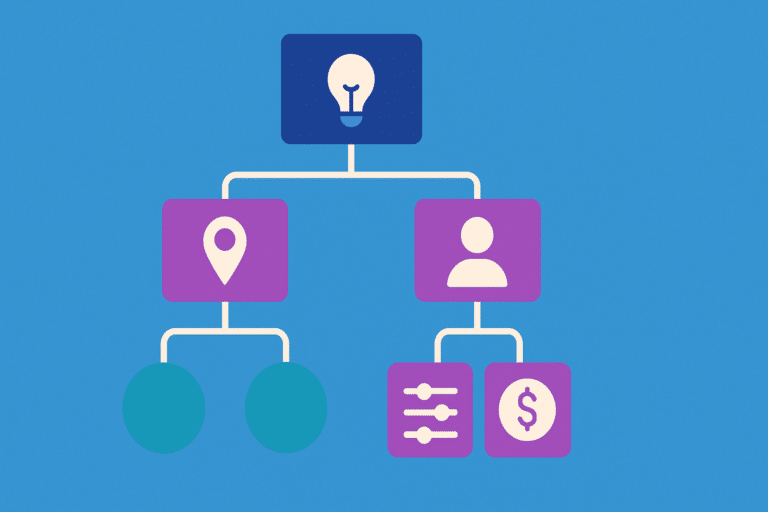
Meta Ads Not Performing? A Real Diagnostic Method
Read the article: Meta Ads Not Performing? A Real Diagnostic MethodMeta ads not performing? A diagnostic method that checks four gates in order: creative, offer and landing page, tracking, then signal volume and audience.
-
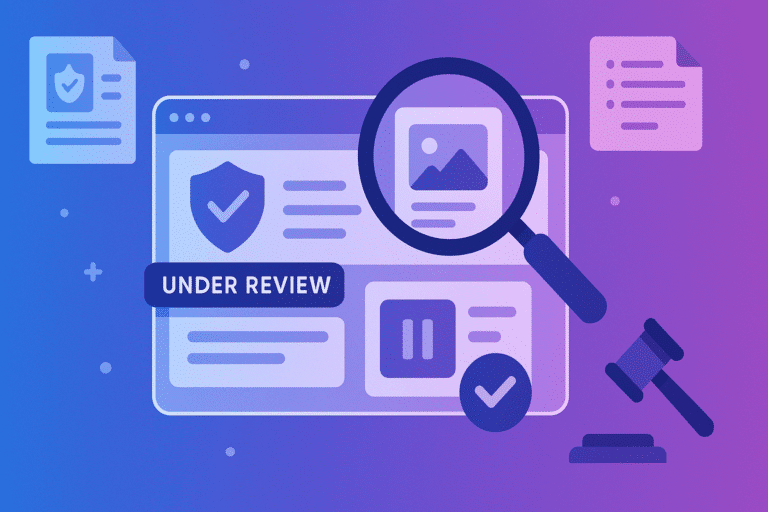
Meta Ad Policies and Account Bans: Avoid and Recover
Read the article: Meta Ad Policies and Account Bans: Avoid and RecoverMeta ad policies and account bans: how review works, the rules that get accounts disabled, special ad categories, how to avoid a ban and recover on appeal.
-
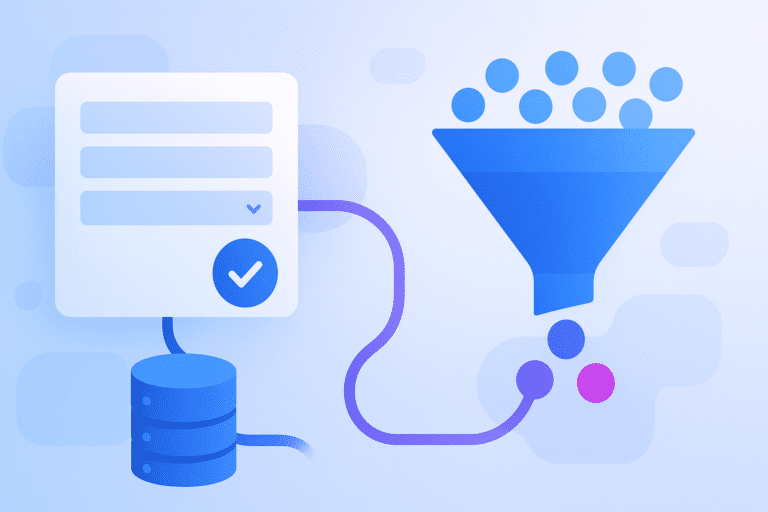
Meta Lead Generation for B2B: The Honest Guide
Read the article: Meta Lead Generation for B2B: The Honest GuideMeta lead generation for B2B: B2B buyers are on Facebook. Instant forms that qualify, optimizing for the deep event, CRM connection and long sales cycles.
-

Advantage+ Shopping (ASC): The E-commerce Guide
Read the article: Advantage+ Shopping (ASC): The E-commerce GuideAdvantage+ Shopping campaigns (ASC): the e-commerce guide to catalog setup, the existing customer cap, creative volume, budget and how many campaigns to run.
-

Scaling Meta Ads Without Breaking Performance
Read the article: Scaling Meta Ads Without Breaking PerformanceScaling Meta ads without breaking performance: vertical scaling and the 20% rule, horizontal scaling, budget structure and the creative ceiling.
-

Meta Learning Phase: How It Really Works
Read the article: Meta Learning Phase: How It Really WorksMeta learning phase: the 50 events per week rule, Learning Limited, what actually resets learning, and why panic edits on day two only restart the clock.
-

Meta Bid Strategies: Lowest Cost vs Cost Cap vs ROAS
Read the article: Meta Bid Strategies: Lowest Cost vs Cost Cap vs ROASMeta bid strategies: lowest cost, cost cap, bid cap and ROAS goal, how the auction rewards total value and what each strategy is really for.
-
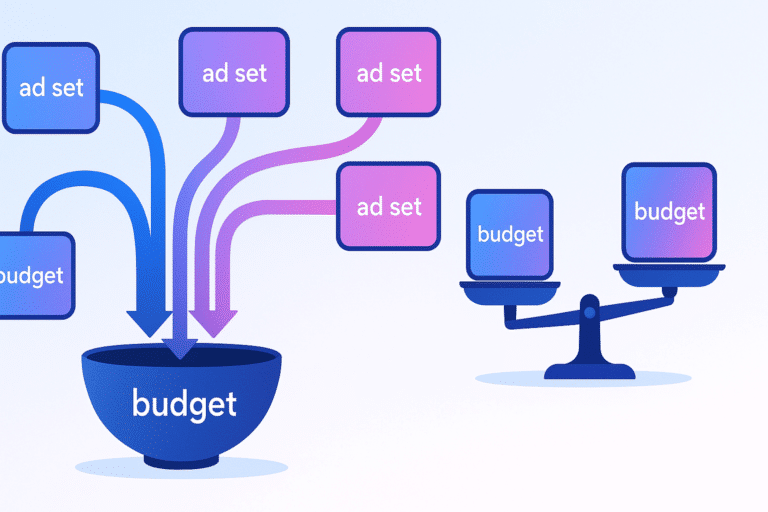
CBO vs ABO on Meta: Which Budget Wins
Read the article: CBO vs ABO on Meta: Which Budget WinsCBO vs ABO on Meta: what each budget setting does, how the algorithm splits money, when ABO is right, when CBO earns its reputation and how to scale.
-

Meta Ad Copywriting: What Actually Converts
Read the article: Meta Ad Copywriting: What Actually ConvertsMeta ad copywriting: what converts in primary text, headline and link description, why short copy does not always win and how to front-load the hook.
-

Meta Creative Testing: Find Winning Ads
Read the article: Meta Creative Testing: Find Winning AdsMeta creative testing: concept versus iteration, three test structures, the volume you actually need and the signals that predict winning ads.
-

UGC for Meta Ads: Why It Works and How to Produce It
Read the article: UGC for Meta Ads: Why It Works and How to Produce ItUGC for Meta ads: why creator content works, what it really costs, how to brief a creator, the myths that waste money and where AI fits.
-

Meta Ad Formats: Which One, When, and Why
Read the article: Meta Ad Formats: Which One, When, and WhyMeta ad formats: when to use single image, video, carousel, collection, Reels and Stories, why vertical comes first and the safe zone trap.


-

GEO: the five studies that could prove us wrong
Read the article: GEO: the five studies that could prove us wrongGEO, the five studies that could prove us wrong: the strongest published evidence against our position, and the conditions that would change our mind.
-

Test GEO on your own site in 30 days: our protocol
Read the article: Test GEO on your own site in 30 days: our protocolTest GEO on your own site in 30 days: our protocol with a control group, a baseline, targeted changes and repeated measurements you can read honestly.
-

What GEO really costs, and what we refuse to sell
Read the article: What GEO really costs, and what we refuse to sellWhat GEO really costs: 55% of marketers have a GEO budget yet no practitioner discloses an amount. Our rates, and the GEO services we refuse to bill for.
-
Are the publisher apocalypse numbers honest?
Read the article: Are the publisher apocalypse numbers honest?Publisher traffic decline: minus 58%, minus 70% or minus 10%? Each camp measures something different with the same word. How to read AI traffic loss numbers.
-
Sixteen percent of the sources AI cites are themselves written by AI
Read the article: Sixteen percent of the sources AI cites are themselves written by AI16% of the sources AI cites are written by AI, per an audit of 712 queries on four engines. Why GEO rewards what degrades the corpus, and what to do.
-
Manipulating AI answers: what works in the lab, what holds up in production
Read the article: Manipulating AI answers: what works in the lab, what holds up in productionManipulating AI answers: injection attacks work in the lab, but a 1,000-site black-hat testbed shows 99.78% neutralization in production. The real weakness.
-
The sources AI prefers are not yours
Read the article: The sources AI prefers are not yoursThe sources AI prefers are not yours: generative engines favor third-party sources over brand sites, so most GEO budgets target the wrong place.
-
Global brands 73 percent, niche brands 11 percent: GEO democratizes nothing
Read the article: Global brands 73 percent, niche brands 11 percent: GEO democratizes nothingGEO democratizes nothing: across 100,000 AI answers, global brands reach 73% visibility and niche brands start at 11%. What it changes for a small business.
-
Position bias: your content is not losing on substance, it is losing in the middle
Read the article: Position bias: your content is not losing on substance, it is losing in the middlePosition bias in AI answers: model accuracy follows a U-shaped curve by position in the context, so part of GEO visibility is a placement artifact.
-
Your GEO tracking tool is measuring noise
Read the article: Your GEO tracking tool is measuring noiseGEO tracking tools measure noise: visibility in AI answers is a distribution, not a point, so one monthly measurement proves nothing. The minimum protocol.
-
30.6 percent of AI citations misrepresent their source: the real risk is not absence, it is error
Read the article: 30.6 percent of AI citations misrepresent their source: the real risk is not absence, it is errorAI citations misrepresent their source 30.6% of the time, across 761,495 citation pairs. For a brand, the real GEO risk is not absence but error.
-
The GEO market is booming, usage is flat: the gap nobody looks at
Read the article: The GEO market is booming, usage is flat: the gap nobody looks atThe GEO market is booming while usage is flat: the Reuters Institute sees no growth in chatbot use for news, as 55% of marketers open a GEO budget.


-

WooCommerce SEO: The Complete Guide to Product and Category Pages
Read the article: WooCommerce SEO: The Complete Guide to Product and Category PagesStructured data, Merchant Center, variations, filters, stock-outs, categories, images and linking: WooCommerce SEO grounded in Google's own documentation.
-

WooCommerce Cart and Checkout Blocks: The Migration Guide
Read the article: WooCommerce Cart and Checkout Blocks: The Migration GuideShortcodes or blocks, the Store API, plugin audit, additional checkout fields, step-by-step migration, settings, rollback and the CVE-2025-15033 flaw.
-

WooCommerce HPOS: What High-Performance Order Storage Changes and How to Migrate
Read the article: WooCommerce HPOS: What High-Performance Order Storage Changes and How to MigrateHPOS tables, compatibility mode, plugin checks, step-by-step migration, WP-CLI commands, rolling back and the Universal Yums case with ten million records.
-

Which PHP Version for WordPress in 2026? Calendar, Testing and Upgrade
Read the article: Which PHP Version for WordPress in 2026? Calendar, Testing and UpgradeWordPress minimum and recommendation, php.net calendar, the WooCommerce PHP 8.1 case, compatibility testing, upgrading with staging, OPcache and JIT.
-

WP-Cron vs System Cron: Making WordPress Scheduled Tasks Reliable
Read the article: WP-Cron vs System Cron: Making WordPress Scheduled Tasks ReliableHow WP-Cron fires, why it misses, how to switch to a system cron, Action Scheduler, missed scheduled posts, debugging and monitoring your scheduled tasks.
-

WordPress Database Optimization: The Complete Method
Read the article: WordPress Database Optimization: The Complete MethodAutoloaded options, transients, revisions, metadata, WooCommerce sessions and Action Scheduler: clean up your WordPress database without breaking anything.
-

Redis Object Cache for WordPress: The Complete Guide
Read the article: Redis Object Cache for WordPress: The Complete GuideThe WordPress object cache, the Site Health recommendation, Redis or Memcached, plugins, configuration, pitfalls and measuring the gain: the complete guide.
-

WordPress Block Patterns: Synced Patterns, Overrides and Locking
Read the article: WordPress Block Patterns: Synced Patterns, Overrides and LockingSynced and unsynced patterns, content overrides, WordPress 7 content-only mode, theme registration and a working method for editorial teams.
-

Gutenberg vs Page Builders in 2026: Elementor, Divi 5 and Bricks
Read the article: Gutenberg vs Page Builders in 2026: Elementor, Divi 5 and BricksNative editor, Elementor 4, Divi 5 or Bricks: features, page storage, lock-in, real-world performance data and maintenance, to choose wisely in 2026.
-

Full Site Editing and theme.json: The Complete Guide
Read the article: Full Site Editing and theme.json: The Complete GuideBlock themes, templates, theme.json version 3, fluid typography, style variations, client locking and migration: a complete guide to Full Site Editing.
-

Headless WordPress in 2026: When Decoupling Is Worth It
Read the article: Headless WordPress in 2026: When Decoupling Is Worth ItREST API or WPGraphQL, Next.js or Astro, previews, SEO, security and the cost of two stacks: when headless WordPress pays off, and when to avoid it.
-

WordPress Multisite: When to Use It, and When to Avoid It
Read the article: WordPress Multisite: When to Use It, and When to Avoid ItSubdomains or subdirectories, shared users, plugins, backups and migrations: a decision guide to whether a WordPress Multisite network is right for you.