SEO articles
Technical SEO, content and rankings, from real projects.
Google Ads articles
Search, Shopping and Performance Max campaigns that pay for themselves.
Emailing articles
Cold email, deliverability and sequences that get replies.
GEO articles
Generative engine optimization: what is proven, what is not.
-

Topic Clusters & Pillar Pages: Build Topical Authority
Read the article: Topic Clusters & Pillar Pages: Build Topical AuthorityA pillar of 2,500 to 4,000 words, eight to twelve focused spokes, and contextual links both ways. Why the interlinking decides whether the model pays off.
-

301 Redirects and Site Migration: How to Move Your Website Without Losing Your Rankings
Read the article: 301 Redirects and Site Migration: How to Move Your Website Without Losing Your RankingsWhich redirects Google treats as permanent, why they should stay live for at least a year, and how to move a site without losing its ranking value.
-

Canonical Tags & Duplicate Content: How to Avoid SEO Disasters
Read the article: Canonical Tags & Duplicate Content: How to Avoid SEO DisastersGary Illyes says roughly 60% of the web is duplicate content, mostly from URL mechanics, not plagiarism. Why it dilutes signals and how canonicals fix it.
-

Schema Markup for Beginners: How to Add Structured Data to Your Website
Read the article: Schema Markup for Beginners: How to Add Structured Data to Your WebsiteStructured data is not a direct ranking factor, as Google has confirmed, but it unlocks rich results that earn more clicks. How to add Schema.org markup.
-

Backlinks Explained: What They Are, Why They Matter, and How They Work
Read the article: Backlinks Explained: What They Are, Why They Matter, and How They WorkPageRank still runs behind the scenes, though Google retired its public score in 2016. How links pass authority, and why DR and DA are only proxies.
-

Crawl Budget: What It Is, Why It Matters, and How to Stop Wasting It
Read the article: Crawl Budget: What It Is, Why It Matters, and How to Stop Wasting ItCrawl budget matters above a million pages updated weekly, or 10,000 changing daily. For 99% of business sites, apparent crawl issues are quality problems.
-

Site Speed Optimization: A Complete Guide to Making Your Website Fast
Read the article: Site Speed Optimization: A Complete Guide to Making Your Website FastIn Deloitte's study, a 0.1 second gain in mobile load time lifted retail conversions by 8.4%. Speed fixes ranked by impact, starting with the server.
-

Core Web Vitals: What They Are, Why They Matter, and How to Fix Them
Read the article: Core Web Vitals: What They Are, Why They Matter, and How to Fix ThemOnly 48% of mobile pages pass all three Core Web Vitals, and LCP is the hardest. What each metric measures, Google's thresholds, and the usual culprits.
-

Header Tags (H1-H6): What Google Says, What Matters, and What Doesn’t
Read the article: Header Tags (H1-H6): What Google Says, What Matters, and What Doesn’tMultiple H1 tags are fine and heading order does not affect rankings, say Mueller and Illyes. What headings actually do for Google, and which rules to ignore.
-

Image SEO: How to Optimize Images So Google (and Users) Can Actually Find Them
Read the article: Image SEO: How to Optimize Images So Google (and Users) Can Actually Find ThemGoogle reads images through file names, alt text, page context and structured data. A walkthrough of each signal, based on Google's own documentation.
-

URL Structure for SEO: What Google Actually Cares About (and What It Doesn’t)
Read the article: URL Structure for SEO: What Google Actually Cares About (and What It Doesn’t)John Mueller says URL length does not matter and calls keywords in URLs a very small, overrated signal. What that means for new and existing sites.
-

Internal Linking: How to Build a Link Structure That Google Loves
Read the article: Internal Linking: How to Build a Link Structure That Google LovesIn our 2024 and 2025 client work, every major ranking boost came from internal structure, not new backlinks. How to spread authority and avoid orphan pages.


-

Optimizing Your Merchant Center Product Feed: Titles, Descriptions and Attributes
Read the article: Optimizing Your Merchant Center Product Feed: Titles, Descriptions and AttributesIn Shopping and Performance Max, the feed wins auctions. Title rewrites lift CTR 31% on average, and one audit ties 64% of ROAS variance to feed quality.
-

Fixing Merchant Center Errors: Diagnosis and Solutions
Read the article: Fixing Merchant Center Errors: Diagnosis and SolutionsIf Shopping impressions drop over 20% in 24 hours, check Merchant Center before Google Ads. How to read diagnostics, fix item errors and appeal suspensions.
-

Product Studio: AI-Powered Image, Video and 3D Creation in Google Merchant Center
Read the article: Product Studio: AI-Powered Image, Video and 3D Creation in Google Merchant CenterProduct Studio turns existing product photos into new scenes, short Veo videos and 3D rotations. Where it helps Performance Max and where it falls short.
-

Schema.org Product Structured Data: Rich Results and AI Overviews
Read the article: Schema.org Product Structured Data: Rich Results and AI OverviewsComplete Product markup gets pages cited in AI Overviews. Required properties, feed parity, debugging and setup on Shopify, WooCommerce and custom sites.
-

Multi-Country Merchant Center: Currencies, Shipping, Taxes and Returns
Read the article: Multi-Country Merchant Center: Currencies, Shipping, Taxes and ReturnsAdding a country audits your whole catalog. Why the account is the unit of suspension, and how to handle currency, VAT, shipping and returns per country.
-

Free Listings, Promotions and Automated Discounts in Merchant Center
Read the article: Free Listings, Promotions and Automated Discounts in Merchant CenterNone of these three Merchant Center features bills per click. In documented cases, free listings added 15 to 35 percent more clicks a month at no cost.
-

Google Ads Keyword Research: Tools, Intent and Strategy
Read the article: Google Ads Keyword Research: Tools, Intent and StrategyAI bidding scales whatever keywords you feed it. Why intent still decides profit, with comparison queries converting at 6.1% versus 1.4% for exploratory ones.
-

Google Ads Keyword Match Types: Broad, Phrase, Exact and 2026 AI-Powered Strategy
Read the article: Google Ads Keyword Match Types: Broad, Phrase, Exact and 2026 AI-Powered StrategyMatch types now act as a steering signal for Smart Bidding, not a literal contract. What each one does in 2026 and how to audit the search terms report.
-

Google Ads Negative Keywords: Lists, Levels, Scripts and Account Hygiene
Read the article: Google Ads Negative Keywords: Lists, Levels, Scripts and Account HygieneUntended accounts waste 20 to 40 percent of budget on off-target queries. Why broad match and Performance Max raise the stakes, and how to set up negatives.
-

Writing High-Performing Search Ads: RSA, Pinning, Ad Strength and Testing
Read the article: Writing High-Performing Search Ads: RSA, Pinning, Ad Strength and TestingAd Strength rates your inputs, not results, and pinning one headline cuts your testing surface by 75 percent. How RSAs serve, and a 30-day testing plan.
-

Dynamic Search Ads: Setup, Page Indexing and Use Cases
Read the article: Dynamic Search Ads: Setup, Page Indexing and Use CasesDynamic Search Ads use your site as the keyword list and remain fully operational. Their four targeting modes, page feeds and when they pay or waste budget.
-

AI Max for Search: Keywordless Search, Text Customization and URL Expansion
Read the article: AI Max for Search: Keywordless Search, Text Customization and URL ExpansionAI Max adds keywordless matching, generated copy and URL expansion to a Search campaign. The controls that matter and a 30-day test to see if it pays off.


-

You do not hunt spam traps
Read the article: You do not hunt spam trapsSpamhaus sees a spam trap as proof of a collection or hygiene problem, not a thing to hunt. Hard bounces above 5 percent point to the same flaw.
-

What M3AAWG condemns exactly in cold email
Read the article: What M3AAWG condemns exactly in cold emailM3AAWG's November 2025 position condemns deceptive delivery, not cold email as such. Masked domains, dodged volume limits and fake one-to-one mail are out.
-

One hundred and fifty-four messages, 871,660 dollars
Read the article: One hundred and fifty-four messages, 871,660 dollarsAustralia, Canada and the United Kingdom compared on consent, unsubscribe deadlines and fines, such as 7.5 million Australian dollars for Commonwealth Bank.
-

In the United States it is legal, and it costs $53,088 a message
Read the article: In the United States it is legal, and it costs $53,088 a messageCAN-SPAM needs no prior consent, but each non-compliant email is a separate violation, and the 2025 amount holds for 2026. Verkada paid $2.95 million.
-

The cumulation of sanctions is struck down, the ban is not
Read the article: The cumulation of sanctions is struck down, the ban is notDecision 2026-1210 QPC strikes down the cumulation of fines by three authorities, with repeal deferred to October 2027. The consent requirement stands.
-

Three years, and opening an email does not count
Read the article: Three years, and opening an email does not countThe CNIL caps prospect data at three years from the person's last contact. Opens do not count, and silence to a renewal request means deletion or archiving.
-

Buying a list obliges you to write to people who don’t know you
Read the article: Buying a list obliges you to write to people who don’t know youUnder GDPR Article 14, a list buyer must notify every contact within one month and name the seller. Consent does not transfer, and the effort exemption fails.
-

The customer exception does not cover account creation
Read the article: The customer exception does not cover account creationThe customer exception has four cumulative conditions, and the CNIL says creating an account is not a sale. Cart reminders to non-buyers need consent.
-

The ePrivacy Regulation died on 6 October 2025
Read the article: The ePrivacy Regulation died on 6 October 2025The Commission withdrew the ePrivacy Regulation on 6 October 2025, after eight years. Directive 2002/58/EC and its 27 national transpositions stay in force.
-

What the CNIL says about B2B, and what it no longer says
Read the article: What the CNIL says about B2B, and what it no longer saysThe CNIL's current pages base B2B prospecting on legitimate interest when the offer fits the person's job. The old named address rule is nowhere in them.
-

No email benchmark has a primary source
Read the article: No email benchmark has a primary sourceEvery open rate benchmark comes from a vendor measuring its own customers, on a pixel Apple preloads. Your own time series and a control group work better.
-

The open rate died in June 2021
Read the article: The open rate died in June 2021Since Apple's Mail Privacy Protection, announced on 7 June 2021, Apple Mail loads the pixel whether or not anyone reads. It measures a delivery, not an open.
-
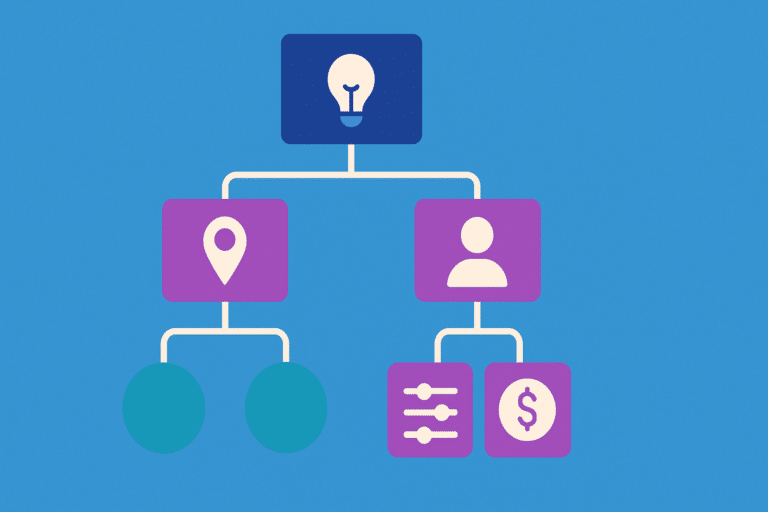
Meta Ads Not Performing? A Real Diagnostic Method
Read the article: Meta Ads Not Performing? A Real Diagnostic MethodMost underperformance has one dominant cause, found by checking four gates in order: the click, the landing page, tracking, then signal volume.
-
Meta Ad Policies and Account Bans: Avoid and Recover
Read the article: Meta Ad Policies and Account Bans: Avoid and RecoverMost Meta bans are really restrictions, and many are reversed on appeal, but not after 180 days. A calm, documented review request gives you the best odds.
-
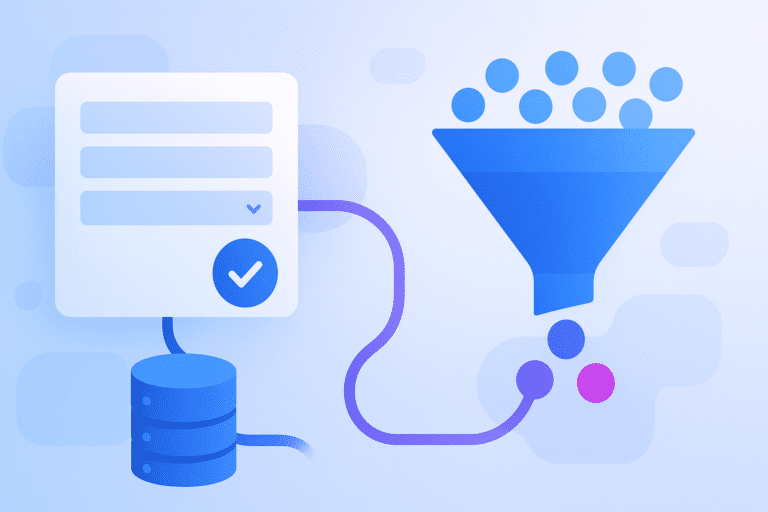
Meta Lead Generation for B2B: The Honest Guide
Read the article: Meta Lead Generation for B2B: The Honest GuideFacebook clicks average about $0.62 versus $5.39 on LinkedIn. B2B buyers are on Meta; the job is capturing intent, qualifying leads and tying them to revenue.
-

Advantage+ Shopping (ASC): The E-commerce Guide
Read the article: Advantage+ Shopping (ASC): The E-commerce GuideAdvantage+ Shopping passed a 20 billion dollar annual run rate in Q4 2024. It leans hard on your catalog and creative volume, and it does not always win.
-

Scaling Meta Ads Without Breaking Performance
Read the article: Scaling Meta Ads Without Breaking PerformanceScaling on Meta is about pace and structure, not a bigger budget. Vertical and horizontal scaling each fit a case, and each must protect the learning phase.
-

Meta Learning Phase: How It Really Works
Read the article: Meta Learning Phase: How It Really WorksCost per result can run two to three times above target while Meta explores, so day two tells you almost nothing. Panic edits only reset the clock.
-

Meta Bid Strategies: Lowest Cost vs Cost Cap vs ROAS
Read the article: Meta Bid Strategies: Lowest Cost vs Cost Cap vs ROASMeta's auction rewards total value, not the highest bid, so the default strategy is usually right. Cost cap, bid cap and ROAS goals solve specific problems.
-
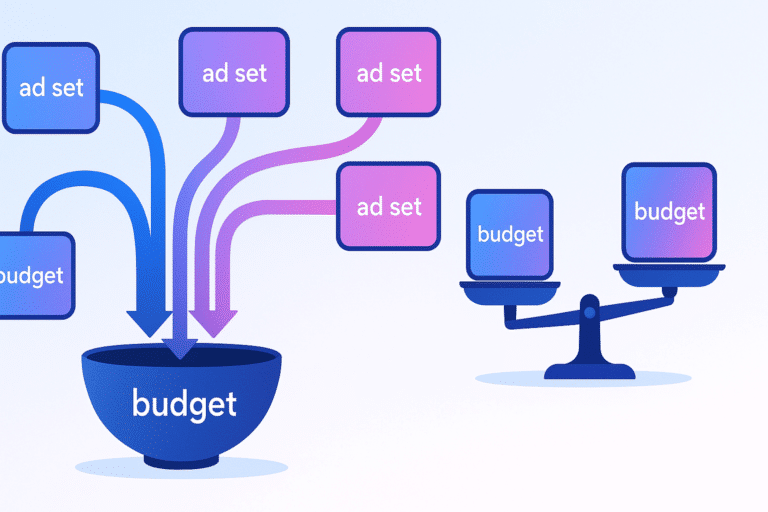
CBO vs ABO on Meta: Which Budget Wins
Read the article: CBO vs ABO on Meta: Which Budget WinsCBO and ABO are not a ranking but two places to put a budget. Below about fifty events per ad set in seven days, CBO simply guesses with your whole…
-

Meta Ad Copywriting: What Actually Converts
Read the article: Meta Ad Copywriting: What Actually ConvertsMeta recommends about 125 characters of primary text and 40 for the headline, but short copy does not always win. Length should follow audience temperature.
-

Meta Creative Testing: Find Winning Ads
Read the article: Meta Creative Testing: Find Winning AdsSingle-variable tests need about fifty conversions per cell, so six variants need three hundred. Creative testing on Meta is a hunt for outliers instead.
-

UGC for Meta Ads: Why It Works and How to Produce It
Read the article: UGC for Meta Ads: Why It Works and How to Produce ItEmplifi measured a 10.38x higher conversion rate for social posts with UGC in Q3 2025. Creator content still costs money, needs a real brief and can lose.
-

Meta Ad Formats: Which One, When, and Why
Read the article: Meta Ad Formats: Which One, When, and WhyReels reached 26 percent of Instagram ad impressions in Q3 2025, so design in 9:16 first. Video does not always beat image, and the carousel is not dead.


-

Being cited by AI is not being read: nobody clicks your sources
Read the article: Being cited by AI is not being read: nobody clicks your sourcesLinks displayed inside an AI summary are clicked roughly one time in a hundred. What becomes of your content when it is cited but never opened.
-

GEO, AEO, LLMO: untangling a vocabulary invented by the people selling it
Read the article: GEO, AEO, LLMO: untangling a vocabulary invented by the people selling itThree acronyms for the same object. Google writes in its own documentation that it is still SEO, and points buyers of GEO services at its page on evaluating third-party advice.
-

All 45 GEO studies, sorted: what is proven, what is plausible, what is folklore
Read the article: All 45 GEO studies, sorted: what is proven, what is plausible, what is folkloreA July 2026 survey reviewed 45 GEO studies published since 2023. Verdict: no technique shows a stable causal effect. Here is the sort, column by column.
-

The 40 percent study everyone quotes: what it actually says
Read the article: The 40 percent study everyone quotes: what it actually saysThe founding GEO number is real and published. It is also systematically misquoted: the gains assume your source is already inside the model's context.
-

The GEO paradox: when everyone optimizes, nobody wins
Read the article: The GEO paradox: when everyone optimizes, nobody winsA June 2026 study measures what happens to GEO once every brand adopts it: the individual gain falls from +0.802 to +0.007. Here are the two levers that survive.


