All articles
SEO, Google Ads, emailing, Meta Ads, GEO and WordPress, newest first.
SEO articles
Technical SEO, content and rankings, from real projects.
Google Ads articles
Search, Shopping and Performance Max campaigns that pay for themselves.
Emailing articles
Cold email, deliverability and sequences that get replies.
GEO articles
Generative engine optimization: what is proven, what is not.
WordPress articles
WordPress, WooCommerce, the block editor and performance, from real projects.
-

Internal Linking: How to Build a Link Structure That Google Loves
Read the article: Internal Linking: How to Build a Link Structure That Google LovesInternal linking: how to build a link structure that spreads authority, avoids orphan pages and helps Google understand your site, with audit methods.
-

Semantic SEO: How to Write for Meaning, Not Just Keywords
Read the article: Semantic SEO: How to Write for Meaning, Not Just KeywordsSemantic SEO: Google now reads entities and meaning, not strings of text. How the shift unfolded from Hummingbird to BERT, and how to write for meaning.
-

Title Tags and Meta Descriptions: How to Write Them for Clicks and Rankings
Read the article: Title Tags and Meta Descriptions: How to Write Them for Clicks and RankingsTitle tags and meta descriptions: Google rewrites 76% of titles yet ranks pages on the original. How to write titles and descriptions that earn the click.
-

Competitive Keyword Analysis: How to Find What Your Competitors Rank For (and Steal Their Best Ideas)
Read the article: Competitive Keyword Analysis: How to Find What Your Competitors Rank For (and Steal Their Best Ideas)Competitive keyword analysis: how to identify your real SEO competitors, find the keywords they rank for, and turn their gaps into your content plan.
-

Keyword Cannibalization: The SEO Myth That Sells Audits (and What Google Actually Says)
Read the article: Keyword Cannibalization: The SEO Myth That Sells Audits (and What Google Actually Says)Keyword cannibalization is mostly a myth: Google does not penalize several pages on one topic. What John Mueller says, and why a page really fails to rank.
-

Updating Old Content: The Highest-ROI SEO Activity Nobody Does
Read the article: Updating Old Content: The Highest-ROI SEO Activity Nobody DoesUpdating old content: HubSpot found regularly updated pages get 106% more organic traffic. How to pick which pages to refresh first and make updates routine.
-

How Often Should You Publish Blog Posts? The Data-Driven Answer for 2026
Read the article: How Often Should You Publish Blog Posts? The Data-Driven Answer for 2026How often to publish blog posts: HubSpot data shows 16+ posts a month bring 3.5 times more traffic, but the right cadence depends on your situation.
-

E-E-A-T in 2026: What Google Expects From Your Website and How to Deliver It
Read the article: E-E-A-T in 2026: What Google Expects From Your Website and How to Deliver ItE-E-A-T in 2026: there is no E-E-A-T score, yet content lacking it underperforms. The four pillars in practice and how to strengthen your signals.
-

How to Write Content That Google Loves and Humans Actually Read
Read the article: How to Write Content That Google Loves and Humans Actually ReadHow to write content Google ranks and people read: what the Helpful Content system evaluates, E-E-A-T, structure, and standing out from AI content.
-

Technical SEO Demystified: What Business Owners Need to Know Without the Jargon
Read the article: Technical SEO Demystified: What Business Owners Need to Know Without the JargonTechnical SEO without the jargon: crawling, architecture, speed, HTTPS, mobile-first indexing and structured data, explained so you can brief your developer.
-

On-Page SEO: The Complete Checklist for Every Page on Your Website
Read the article: On-Page SEO: The Complete Checklist for Every Page on Your WebsiteOn-page SEO checklist: every element of a page in the order to fix it, from title tags and meta descriptions to headings, content and internal links.
-

Long-Tail Keywords: How to Find Low-Competition Terms That Actually Convert
Read the article: Long-Tail Keywords: How to Find Low-Competition Terms That Actually ConvertLong-tail keywords: roughly 70% of search traffic, better conversion rates and less competition. Free and paid methods to find them and use them in content.


-

Image SEO: How to Optimize Images So Google (and Users) Can Actually Find Them
Read the article: Image SEO: How to Optimize Images So Google (and Users) Can Actually Find ThemImage SEO: how Google reads images through file names, alt text, page context and structured data, plus formats, compression and responsive images.
-

URL Structure for SEO: What Google Actually Cares About (and What It Doesn’t)
Read the article: URL Structure for SEO: What Google Actually Cares About (and What It Doesn’t)URL structure for SEO: John Mueller calls keywords in URLs a very small signal and length irrelevant. What actually matters, and the myths that waste time.
-
Internal Linking: How to Build a Link Structure That Google Loves
Read the article: Internal Linking: How to Build a Link Structure That Google LovesInternal linking: how to build a link structure that spreads authority, avoids orphan pages and helps Google understand your site, with audit methods.
-
Semantic SEO: How to Write for Meaning, Not Just Keywords
Read the article: Semantic SEO: How to Write for Meaning, Not Just KeywordsSemantic SEO: Google now reads entities and meaning, not strings of text. How the shift unfolded from Hummingbird to BERT, and how to write for meaning.
-
Title Tags and Meta Descriptions: How to Write Them for Clicks and Rankings
Read the article: Title Tags and Meta Descriptions: How to Write Them for Clicks and RankingsTitle tags and meta descriptions: Google rewrites 76% of titles yet ranks pages on the original. How to write titles and descriptions that earn the click.
-
Competitive Keyword Analysis: How to Find What Your Competitors Rank For (and Steal Their Best Ideas)
Read the article: Competitive Keyword Analysis: How to Find What Your Competitors Rank For (and Steal Their Best Ideas)Competitive keyword analysis: how to identify your real SEO competitors, find the keywords they rank for, and turn their gaps into your content plan.
-
Keyword Cannibalization: The SEO Myth That Sells Audits (and What Google Actually Says)
Read the article: Keyword Cannibalization: The SEO Myth That Sells Audits (and What Google Actually Says)Keyword cannibalization is mostly a myth: Google does not penalize several pages on one topic. What John Mueller says, and why a page really fails to rank.
-
Updating Old Content: The Highest-ROI SEO Activity Nobody Does
Read the article: Updating Old Content: The Highest-ROI SEO Activity Nobody DoesUpdating old content: HubSpot found regularly updated pages get 106% more organic traffic. How to pick which pages to refresh first and make updates routine.
-
How Often Should You Publish Blog Posts? The Data-Driven Answer for 2026
Read the article: How Often Should You Publish Blog Posts? The Data-Driven Answer for 2026How often to publish blog posts: HubSpot data shows 16+ posts a month bring 3.5 times more traffic, but the right cadence depends on your situation.
-
E-E-A-T in 2026: What Google Expects From Your Website and How to Deliver It
Read the article: E-E-A-T in 2026: What Google Expects From Your Website and How to Deliver ItE-E-A-T in 2026: there is no E-E-A-T score, yet content lacking it underperforms. The four pillars in practice and how to strengthen your signals.
-
How to Write Content That Google Loves and Humans Actually Read
Read the article: How to Write Content That Google Loves and Humans Actually ReadHow to write content Google ranks and people read: what the Helpful Content system evaluates, E-E-A-T, structure, and standing out from AI content.
-
Technical SEO Demystified: What Business Owners Need to Know Without the Jargon
Read the article: Technical SEO Demystified: What Business Owners Need to Know Without the JargonTechnical SEO without the jargon: crawling, architecture, speed, HTTPS, mobile-first indexing and structured data, explained so you can brief your developer.


-

The Most Expensive Google Ads Mistakes: Diagnosis and Real Cases
Read the article: The Most Expensive Google Ads Mistakes: Diagnosis and Real CasesThe most expensive Google Ads mistakes, from real audits: wrong audiences, broad match bleed, missing negatives, Quality Score traps and broken tracking.
-

Google Ads Policy and Suspensions: Sensitive Categories and Appeal Process
Read the article: Google Ads Policy and Suspensions: Sensitive Categories and Appeal ProcessGoogle Ads policy and suspensions: prohibited, restricted and sensitive categories, what triggers a suspension, the appeal process and prevention.
-

Query Sculpting: Advanced Shopping Architecture with Priorities and Negatives
Read the article: Query Sculpting: Advanced Shopping Architecture with Priorities and NegativesQuery sculpting for Google Shopping: three duplicate campaigns at high, medium and low priority, with negatives routing each query to the right bid.
-

Connected TV Advertising: CTV Campaigns via YouTube and Demand Gen
Read the article: Connected TV Advertising: CTV Campaigns via YouTube and Demand GenConnected TV advertising with Google: YouTube CTV, Demand Gen, shoppable CTV ads, programmatic buying through DV360 and audience targeting on TV screens.
-

Google Ads Scripts and Automation: Essential Scripts for 2026
Read the article: Google Ads Scripts and Automation: Essential Scripts for 2026Google Ads scripts in 2026: anomaly detection, bid and budget pacing, search query analysis and link checking, the scripts worth running in every account.
-

Google Ads A/B Testing: Variations, Experiments and Campaign Mix
Read the article: Google Ads A/B Testing: Variations, Experiments and Campaign MixGoogle Ads A/B testing: custom experiments, ad variations and Campaign Mix Experiments, with step-by-step setup and how to read statistical significance.
-

Call Tracking and Migration to Call Assets: 2026 Guide
Read the article: Call Tracking and Migration to Call Assets: 2026 GuideCall tracking in Google Ads: call-only ads stop serving in February 2027. How call assets work, tracking requirements and how to migrate without losing calls.
-

Advanced Google Ads Reporting: Custom Columns, Dashboards and Looker Studio
Read the article: Advanced Google Ads Reporting: Custom Columns, Dashboards and Looker StudioAdvanced Google Ads reporting: custom columns with spreadsheet functions, saved reports, dashboards, Looker Studio and BigQuery for large accounts.
-
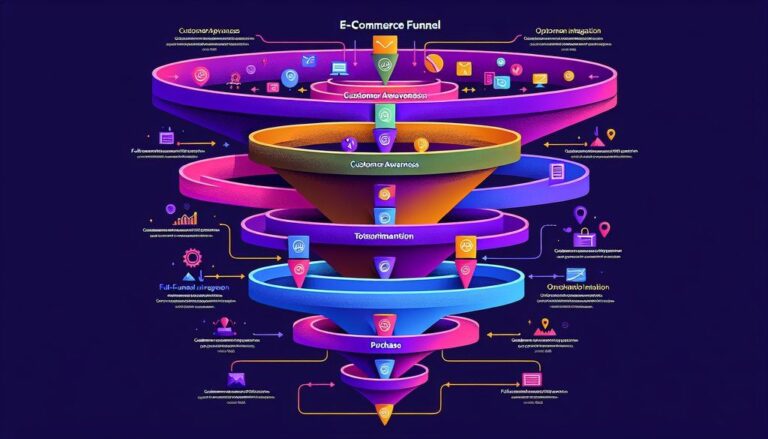
Google Ads for E-commerce: Full Funnel Strategy
Read the article: Google Ads for E-commerce: Full Funnel StrategyGoogle Ads for e-commerce, a full funnel strategy: budget split by funnel stage, Shopping and feed quality, Performance Max and campaign KPIs.
-

Google Ads for B2B and Lead Generation: Forms, CRM and Long Sales Cycles
Read the article: Google Ads for B2B and Lead Generation: Forms, CRM and Long Sales CyclesGoogle Ads for B2B lead generation: lead form assets, CRM connection, offline conversion imports and bidding for sales cycles that last months.
-

Google Ad Grants: $10,000/Month in Free Advertising for Nonprofits
Read the article: Google Ad Grants: $10,000/Month in Free Advertising for NonprofitsGoogle Ad Grants: up to $10,000 a month in free search ads for qualifying nonprofits. Eligibility, the 5% CTR rule, setup requirements and real examples.
-

Consent Mode v2 and GDPR Compliance: Post-Cookie Tracking in 2026
Read the article: Consent Mode v2 and GDPR Compliance: Post-Cookie Tracking in 2026Consent Mode v2 and GDPR in 2026: the four consent parameters, basic versus advanced mode, the Digital Markets Act and conversion modeling without cookies.


-

Double opt-in is written in no legal text
Read the article: Double opt-in is written in no legal textDouble opt-in is in no legal text: the GDPR asks for a clear affirmative action and proof of consent, and the CNIL recommends a consent register.
-

The accessibility directive does not mention your emails
Read the article: The accessibility directive does not mention your emailsEmail accessibility and the European Accessibility Act: Directive (EU) 2019/882 never mentions email and covers websites and apps. Why do it anyway.
-

Dark mode is documented only at Apple
Read the article: Dark mode is documented only at AppleDark mode in email is documented only by Apple: without color-scheme and prefers-color-scheme, a campaign with remote images stays light. The classic accidents.
-

Gmail does not block your images, it steps in
Read the article: Gmail does not block your images, it steps inEmail images in Gmail and Outlook: Outlook blocks them by default, Gmail proxies them, which breaks cookie personalization, IP geolocation and countdowns.
-

Your preheader has been replaced by a summary
Read the article: Your preheader has been replaced by a summaryEmail preheaders and AI summaries: Apple Intelligence replaces your preheader in iPhone Mail by default, while Gmail's summaries start off in Europe.
-

Some of your clicks were never made by anyone
Read the article: Some of your clicks were never made by anyoneBot clicks in email: Microsoft Safe Links opens your links before delivery, and its documentation admits these count as user clicks. How to spot them.
-

Three operators, three ways of telling you
Read the article: Three operators, three ways of telling youEmail feedback loops at Yahoo, Google and Microsoft: Yahoo gives the complaining address, Google only campaign aggregates above an unpublished threshold.
-

Spamhaus does not sell its way out
Read the article: Spamhaus does not sell its way outSpamhaus delisting is always free: the PBL, over 1.4 billion addresses, is not a punishment, and the removal request goes through your sending provider.
-

The dedicated IP you are sold will never warm up
Read the article: The dedicated IP you are sold will never warm upDedicated IP for email: it needs about 1,000 messages a day per provider to stay warm, while on a shared IP the real risk is a quota that stops every…
-

One subdomain per stream, on one condition nobody quotes
Read the article: One subdomain per stream, on one condition nobody quotesOne sending subdomain per email stream: M3AAWG advises it only if each stream keeps steady, sufficient volume. Smaller senders can vary the local part instead.
-

Two thousand messages a day, and that is all
Read the article: Two thousand messages a day, and that is allGoogle Workspace and Microsoft 365 sending limits: 2,000 messages a day per Workspace user, SMTP relay caps, and Microsoft's tenant rules from September 2026.
-

No warm-up schedule has ever been published
Read the article: No warm-up schedule has ever been publishedEmail warm-up schedules: no mailbox provider has ever published one. What Google actually advises, and M3AAWG's six-week figure, the only primary source.
-
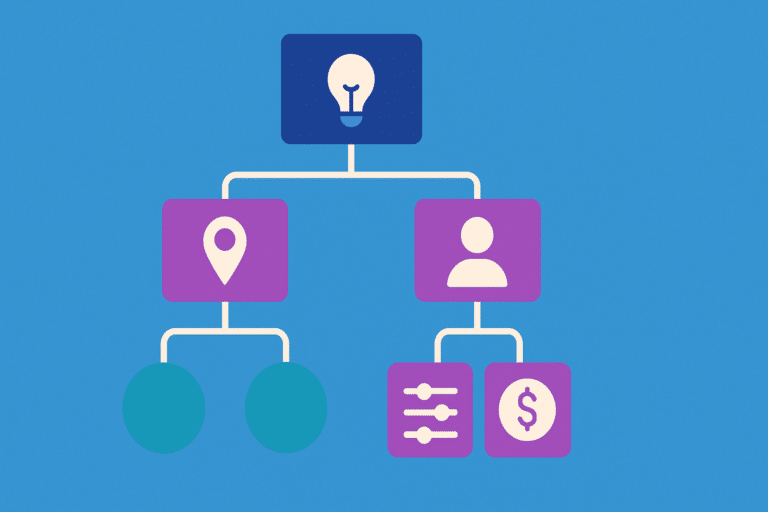
Meta Ads Not Performing? A Real Diagnostic Method
Read the article: Meta Ads Not Performing? A Real Diagnostic MethodMeta ads not performing? A diagnostic method that checks four gates in order: creative, offer and landing page, tracking, then signal volume and audience.
-

Meta Ad Policies and Account Bans: Avoid and Recover
Read the article: Meta Ad Policies and Account Bans: Avoid and RecoverMeta ad policies and account bans: how review works, the rules that get accounts disabled, special ad categories, how to avoid a ban and recover on appeal.
-
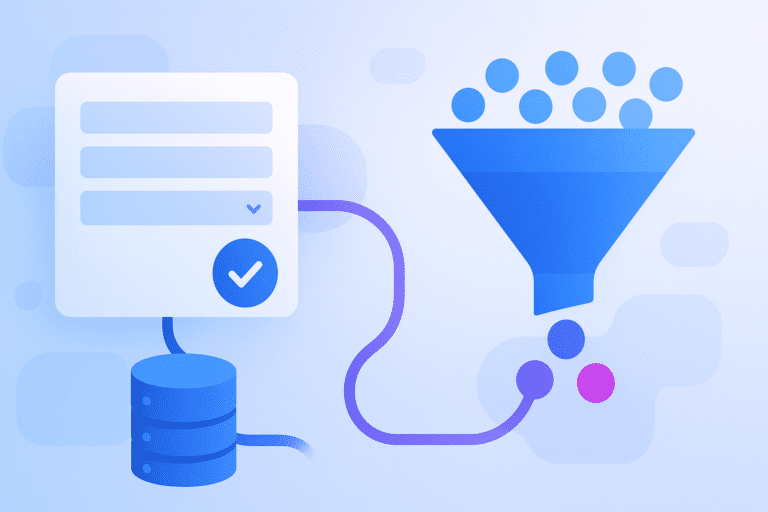
Meta Lead Generation for B2B: The Honest Guide
Read the article: Meta Lead Generation for B2B: The Honest GuideMeta lead generation for B2B: B2B buyers are on Facebook. Instant forms that qualify, optimizing for the deep event, CRM connection and long sales cycles.
-

Advantage+ Shopping (ASC): The E-commerce Guide
Read the article: Advantage+ Shopping (ASC): The E-commerce GuideAdvantage+ Shopping campaigns (ASC): the e-commerce guide to catalog setup, the existing customer cap, creative volume, budget and how many campaigns to run.
-

Scaling Meta Ads Without Breaking Performance
Read the article: Scaling Meta Ads Without Breaking PerformanceScaling Meta ads without breaking performance: vertical scaling and the 20% rule, horizontal scaling, budget structure and the creative ceiling.
-

Meta Learning Phase: How It Really Works
Read the article: Meta Learning Phase: How It Really WorksMeta learning phase: the 50 events per week rule, Learning Limited, what actually resets learning, and why panic edits on day two only restart the clock.
-

Meta Bid Strategies: Lowest Cost vs Cost Cap vs ROAS
Read the article: Meta Bid Strategies: Lowest Cost vs Cost Cap vs ROASMeta bid strategies: lowest cost, cost cap, bid cap and ROAS goal, how the auction rewards total value and what each strategy is really for.
-
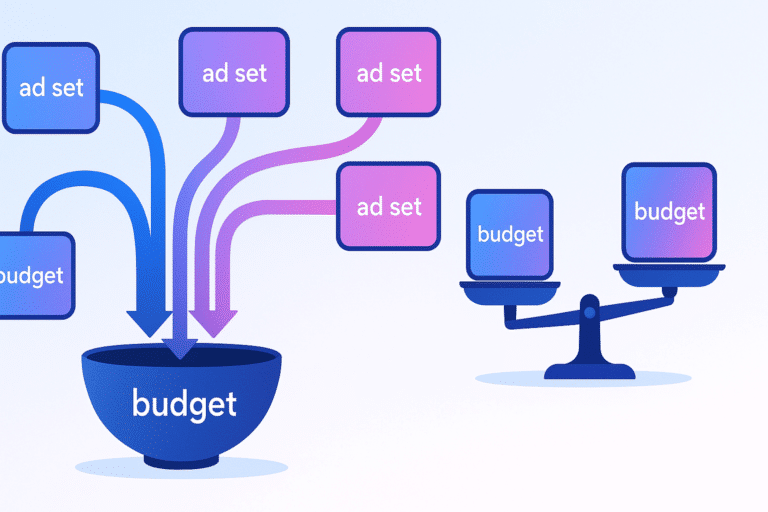
CBO vs ABO on Meta: Which Budget Wins
Read the article: CBO vs ABO on Meta: Which Budget WinsCBO vs ABO on Meta: what each budget setting does, how the algorithm splits money, when ABO is right, when CBO earns its reputation and how to scale.
-

Meta Ad Copywriting: What Actually Converts
Read the article: Meta Ad Copywriting: What Actually ConvertsMeta ad copywriting: what converts in primary text, headline and link description, why short copy does not always win and how to front-load the hook.
-

Meta Creative Testing: Find Winning Ads
Read the article: Meta Creative Testing: Find Winning AdsMeta creative testing: concept versus iteration, three test structures, the volume you actually need and the signals that predict winning ads.
-

UGC for Meta Ads: Why It Works and How to Produce It
Read the article: UGC for Meta Ads: Why It Works and How to Produce ItUGC for Meta ads: why creator content works, what it really costs, how to brief a creator, the myths that waste money and where AI fits.
-

Meta Ad Formats: Which One, When, and Why
Read the article: Meta Ad Formats: Which One, When, and WhyMeta ad formats: when to use single image, video, carousel, collection, Reels and Stories, why vertical comes first and the safe zone trap.


-

GEO: the five studies that could prove us wrong
Read the article: GEO: the five studies that could prove us wrongGEO, the five studies that could prove us wrong: the strongest published evidence against our position, and the conditions that would change our mind.
-

Test GEO on your own site in 30 days: our protocol
Read the article: Test GEO on your own site in 30 days: our protocolTest GEO on your own site in 30 days: our protocol with a control group, a baseline, targeted changes and repeated measurements you can read honestly.
-

What GEO really costs, and what we refuse to sell
Read the article: What GEO really costs, and what we refuse to sellWhat GEO really costs: 55% of marketers have a GEO budget yet no practitioner discloses an amount. Our rates, and the GEO services we refuse to bill for.
-

Are the publisher apocalypse numbers honest?
Read the article: Are the publisher apocalypse numbers honest?Publisher traffic decline: minus 58%, minus 70% or minus 10%? Each camp measures something different with the same word. How to read AI traffic loss numbers.
-

Sixteen percent of the sources AI cites are themselves written by AI
Read the article: Sixteen percent of the sources AI cites are themselves written by AI16% of the sources AI cites are written by AI, per an audit of 712 queries on four engines. Why GEO rewards what degrades the corpus, and what to do.
-

Manipulating AI answers: what works in the lab, what holds up in production
Read the article: Manipulating AI answers: what works in the lab, what holds up in productionManipulating AI answers: injection attacks work in the lab, but a 1,000-site black-hat testbed shows 99.78% neutralization in production. The real weakness.
-

The sources AI prefers are not yours
Read the article: The sources AI prefers are not yoursThe sources AI prefers are not yours: generative engines favor third-party sources over brand sites, so most GEO budgets target the wrong place.
-

Global brands 73 percent, niche brands 11 percent: GEO democratizes nothing
Read the article: Global brands 73 percent, niche brands 11 percent: GEO democratizes nothingGEO democratizes nothing: across 100,000 AI answers, global brands reach 73% visibility and niche brands start at 11%. What it changes for a small business.
-

Position bias: your content is not losing on substance, it is losing in the middle
Read the article: Position bias: your content is not losing on substance, it is losing in the middlePosition bias in AI answers: model accuracy follows a U-shaped curve by position in the context, so part of GEO visibility is a placement artifact.
-

Your GEO tracking tool is measuring noise
Read the article: Your GEO tracking tool is measuring noiseGEO tracking tools measure noise: visibility in AI answers is a distribution, not a point, so one monthly measurement proves nothing. The minimum protocol.
-

30.6 percent of AI citations misrepresent their source: the real risk is not absence, it is error
Read the article: 30.6 percent of AI citations misrepresent their source: the real risk is not absence, it is errorAI citations misrepresent their source 30.6% of the time, across 761,495 citation pairs. For a brand, the real GEO risk is not absence but error.
-

The GEO market is booming, usage is flat: the gap nobody looks at
Read the article: The GEO market is booming, usage is flat: the gap nobody looks atThe GEO market is booming while usage is flat: the Reuters Institute sees no growth in chatbot use for news, as 55% of marketers open a GEO budget.


-

WooCommerce SEO: The Complete Guide to Product and Category Pages
Read the article: WooCommerce SEO: The Complete Guide to Product and Category PagesStructured data, Merchant Center, variations, filters, stock-outs, categories, images and linking: WooCommerce SEO grounded in Google's own documentation.
-

WooCommerce Cart and Checkout Blocks: The Migration Guide
Read the article: WooCommerce Cart and Checkout Blocks: The Migration GuideShortcodes or blocks, the Store API, plugin audit, additional checkout fields, step-by-step migration, settings, rollback and the CVE-2025-15033 flaw.
-

WooCommerce HPOS: What High-Performance Order Storage Changes and How to Migrate
Read the article: WooCommerce HPOS: What High-Performance Order Storage Changes and How to MigrateHPOS tables, compatibility mode, plugin checks, step-by-step migration, WP-CLI commands, rolling back and the Universal Yums case with ten million records.
-

Which PHP Version for WordPress in 2026? Calendar, Testing and Upgrade
Read the article: Which PHP Version for WordPress in 2026? Calendar, Testing and UpgradeWordPress minimum and recommendation, php.net calendar, the WooCommerce PHP 8.1 case, compatibility testing, upgrading with staging, OPcache and JIT.
-

WP-Cron vs System Cron: Making WordPress Scheduled Tasks Reliable
Read the article: WP-Cron vs System Cron: Making WordPress Scheduled Tasks ReliableHow WP-Cron fires, why it misses, how to switch to a system cron, Action Scheduler, missed scheduled posts, debugging and monitoring your scheduled tasks.
-

WordPress Database Optimization: The Complete Method
Read the article: WordPress Database Optimization: The Complete MethodAutoloaded options, transients, revisions, metadata, WooCommerce sessions and Action Scheduler: clean up your WordPress database without breaking anything.
-

Redis Object Cache for WordPress: The Complete Guide
Read the article: Redis Object Cache for WordPress: The Complete GuideThe WordPress object cache, the Site Health recommendation, Redis or Memcached, plugins, configuration, pitfalls and measuring the gain: the complete guide.
-

WordPress Block Patterns: Synced Patterns, Overrides and Locking
Read the article: WordPress Block Patterns: Synced Patterns, Overrides and LockingSynced and unsynced patterns, content overrides, WordPress 7 content-only mode, theme registration and a working method for editorial teams.
-

Gutenberg vs Page Builders in 2026: Elementor, Divi 5 and Bricks
Read the article: Gutenberg vs Page Builders in 2026: Elementor, Divi 5 and BricksNative editor, Elementor 4, Divi 5 or Bricks: features, page storage, lock-in, real-world performance data and maintenance, to choose wisely in 2026.
-

Full Site Editing and theme.json: The Complete Guide
Read the article: Full Site Editing and theme.json: The Complete GuideBlock themes, templates, theme.json version 3, fluid typography, style variations, client locking and migration: a complete guide to Full Site Editing.
-

Headless WordPress in 2026: When Decoupling Is Worth It
Read the article: Headless WordPress in 2026: When Decoupling Is Worth ItREST API or WPGraphQL, Next.js or Astro, previews, SEO, security and the cost of two stacks: when headless WordPress pays off, and when to avoid it.
-

WordPress Multisite: When to Use It, and When to Avoid It
Read the article: WordPress Multisite: When to Use It, and When to Avoid ItSubdomains or subdirectories, shared users, plugins, backups and migrations: a decision guide to whether a WordPress Multisite network is right for you.