SEO articles
Technical SEO, content and rankings, from real projects.
Google Ads articles
Search, Shopping and Performance Max campaigns that pay for themselves.
Emailing articles
Cold email, deliverability and sequences that get replies.
GEO articles
Generative engine optimization: what is proven, what is not.
-

Top 10 Web Design Trends in 2026
Read the article: Top 10 Web Design Trends in 2026Ten trends where restraint beats novelty, including bento grids, dark mode by default and micro-interactions that run at 60 fps and respect reduced motion.
-

Top 10 Free Design Tools for Non-Designers
Read the article: Top 10 Free Design Tools for Non-DesignersTen free tools for polished visuals without training, from Canva templates to Figma for shared mockups and Photopea, a browser Photoshop alternative.
-

Top 10 E-commerce Mistakes That Kill Conversions
Read the article: Top 10 E-commerce Mistakes That Kill ConversionsBaymard puts average cart abandonment at 70.19%. Ten costly store mistakes, from forced sign-up to hidden costs cited by 48% of US shoppers, each with a fix.
-

Top 10 E-commerce Platforms Compared in 2026
Read the article: Top 10 E-commerce Platforms Compared in 2026Ten platforms compared on cost, scalability, SEO and flexibility, from Shopify at $39 a month to free WooCommerce, which can take 10 to 40 hours to set up.
-

Top 10 LinkedIn Post Formats That Drive Engagement in 2026
Read the article: Top 10 LinkedIn Post Formats That Drive Engagement in 2026Ten LinkedIn formats judged on saves, shares and comments, from carousels of 7 to 12 slides to text posts that hook readers within about 200 characters.
-

Top 10 Free Social Media Management Tools in 2026
Read the article: Top 10 Free Social Media Management Tools in 2026Hootsuite, TweetDeck and Crowdfire are gone or paywalled. Only tools with a lasting free tier made this list, each with verified limits and trade-offs.
-

Top 8 Content Marketing Strategies on a Small Budget
Read the article: Top 8 Content Marketing Strategies on a Small BudgetEight content tactics that favor resourcefulness over spend, such as turning one 2,000-word article into 7 to 10 assets and putting customer stories to work.
-

Top 10 Writing and Proofreading Tools for the Web: Comprehensive 2026 Guide
Read the article: Top 10 Writing and Proofreading Tools for the Web: Comprehensive 2026 GuideTen writing assistants compared on grammar, tone, readability, plagiarism and SEO checks, from Grammarly at about 12 USD a month to Antidote for French text.
-

Top 10 Content Types That Drive Organic Traffic in 2026
Read the article: Top 10 Content Types That Drive Organic Traffic in 2026Ten content formats that earn search traffic, from pillar guides with linked subtopic pages to original research and case studies that draw more backlinks.
-

Top 8 Email Verification Tools Compared: Accuracy, Speed, and Pricing
Read the article: Top 8 Email Verification Tools Compared: Accuracy, Speed, and PricingZeroBounce, NeverBounce, Hunter and five other verifiers compared on accuracy, speed, pricing and API, plus how SMTP checks and catch-all detection work.
-

Top 10 Cold Email Best Practices That Get Replies
Read the article: Top 10 Cold Email Best Practices That Get RepliesTen practices that separate a 5 from a 15 percent reply rate, from subject lines under 60 characters tested on replies to personalization beyond first names.
-

Top 10 Email Marketing Tools Compared in 2026
Read the article: Top 10 Email Marketing Tools Compared in 2026There is no universal best platform. Ten tools compared on price, free tier, automation and deliverability, led by MailerLite, free up to 1,000 subscribers.


-

Google Ads for Local: Local Campaigns, GBP and Maps Ads
Read the article: Google Ads for Local: Local Campaigns, GBP and Maps AdsStandalone Local campaigns are gone: local ads now run through Performance Max. How to use store visit goals, Waze pins, Maps and your Business Profile.
-

Local Services Ads: Pay-Per-Lead, Badges and Review Optimization
Read the article: Local Services Ads: Pay-Per-Lead, Badges and Review OptimizationLocal Services Ads bill per lead, typically $25 to $80, with a 31% average booking rate. Lead costs by trade and the math from lead price to profit per job.
-

AI in Google Ads: Complete 2026 Overview
Read the article: AI in Google Ads: Complete 2026 OverviewOver 80% of advertisers now use automated bidding, and 62% of Smart Bidding users run broad match. The 2026 AI features that matter, starting with AI Max.
-

Google Shopping Ads: Standard vs PMax, Segmentation, CSS and Local Inventory
Read the article: Google Shopping Ads: Standard vs PMax, Segmentation, CSS and Local InventoryShopping is now a stack, not one campaign. When Standard still beats PMax, why a CSS partner gives a 20% bid edge in the EU, and how to protect brand…
-

Google Display Network: Targeting, Formats, Placements and Brand Safety
Read the article: Google Display Network: Targeting, Formats, Placements and Brand SafetyDisplay converts at a 0.57% median, against 3.75% on Search. How to decide if it deserves budget, which campaign earns it and what controls protect it.
-

Search Partner Network in 2026: Transparency, Placements and Brand Safety
Read the article: Search Partner Network in 2026: Transparency, Placements and Brand SafetyAdalytics found Search Partner ads on parked, pirate and sanctioned sites in 2023. What Google fixed by 2026, what it left open, and when to opt out.
-

Display Remarketing and Dynamic Remarketing: Lists, Feeds and Sequencing
Read the article: Display Remarketing and Dynamic Remarketing: Lists, Feeds and SequencingA 90-day list that held 600,000 visitors in 2020 now typically holds 150,000 to 250,000 for the same traffic. The remarketing setup that still works.
-

YouTube Ads: Formats, Technical Specifications and Cost Per Format
Read the article: YouTube Ads: Formats, Technical Specifications and Cost Per FormatYouTube sells ten ad formats on three billing models: CPV, CPM and reservation. Specs, observed costs per format and a 90-day plan before scaling spend.
-

YouTube Ads Strategy: Targeting, Video Sequencing and Impact Measurement
Read the article: YouTube Ads Strategy: Targeting, Video Sequencing and Impact MeasurementOptimizing YouTube like Search starves it of signals, since the click rarely happens during the video. Targeting layers, video sequences and lift studies.
-

Performance Max: Setup, Asset Groups and Audience Signals
Read the article: Performance Max: Setup, Asset Groups and Audience SignalsOn most retail accounts we audit, Performance Max takes 70% or more of paid search budget. Asset groups, audience signals as hints and the 3x CPA budget rule.
-

Quality Score and Ad Rank: Auction Mechanics and Optimization in 2026
Read the article: Quality Score and Ad Rank: Auction Mechanics and Optimization in 2026The 1 to 10 score in your dashboard is a four-day diagnostic, not what prices your auctions. How Ad Rank works, which levers move CPC, and a 30-day audit.
-

Google Merchant Center Next: Account Setup and Store Connection
Read the article: Google Merchant Center Next: Account Setup and Store ConnectionAfter the migration, 28 to 34 percent of new accounts were suspended within 90 days. The full setup, the traps behind those suspensions and how to appeal.


-

The accessibility directive does not mention your emails
Read the article: The accessibility directive does not mention your emailsDirective (EU) 2019/882 never uses the word email and limits e-commerce to websites and mobile apps. Neither the Commission guide nor the DGCCRF mentions it.
-

Dark mode is documented only at Apple
Read the article: Dark mode is documented only at AppleApple alone documents it: a campaign with remote images stays in light mode unless it declares color-scheme and uses the prefers-color-scheme media query.
-

Gmail does not block your images, it steps in
Read the article: Gmail does not block your images, it steps inOutlook blocks images by default, citing tracking pixels. Gmail proxies them, which breaks cookie personalization, IP geolocation and live countdowns.
-

Your preheader has been replaced by a summary
Read the article: Your preheader has been replaced by a summaryApple Intelligence replaces your preheader with a summary in iPhone Mail by default. In Europe, Gmail's smart features start off, so it still counts there.
-

Some of your clicks were never made by anyone
Read the article: Some of your clicks were never made by anyoneSafe Links opens your links before delivery, and Microsoft's documentation admits these detonations count as user clicks. Clicks within seconds are the tell.
-

Three operators, three ways of telling you
Read the article: Three operators, three ways of telling youYahoo's feedback loop gives you the address of each recipient who reports spam. Google's only names the campaign, above a threshold it does not publish.
-

Spamhaus does not sell its way out
Read the article: Spamhaus does not sell its way outRemoving a Spamhaus listing is always free. The PBL, over 1.4 billion addresses, is no punishment, and the removal request goes through your provider.
-

The dedicated IP you are sold will never warm up
Read the article: The dedicated IP you are sold will never warm upOn a shared IP, when the IP quota is hit every domain on it stops sending. A dedicated IP needs about 1,000 emails a day per provider just to stay…
-

One subdomain per stream, on one condition nobody quotes
Read the article: One subdomain per stream, on one condition nobody quotesM3AAWG advises one subdomain per sending purpose, if each segment has steady, sufficient volume. Smaller senders can just vary the local part of the address.
-

Two thousand messages a day, and that is all
Read the article: Two thousand messages a day, and that is allA paid Google Workspace user gets 2,000 messages a day on a rolling 24 hours, with tighter recipient caps. Microsoft's rules change on 14 September 2026.
-

No warm-up schedule has ever been published
Read the article: No warm-up schedule has ever been publishedNo mailbox provider has ever published a warm-up table. Google gives principles instead, and the only published figure, from M3AAWG, is six weeks on average.
-

A rejected message tells you exactly why
Read the article: A rejected message tells you exactly whyEvery bounce carries its cause in three numbers. A 4xx may succeed if retried, a 5.1.1 points to your database, and a 5.7.x to reputation or authentication.
-
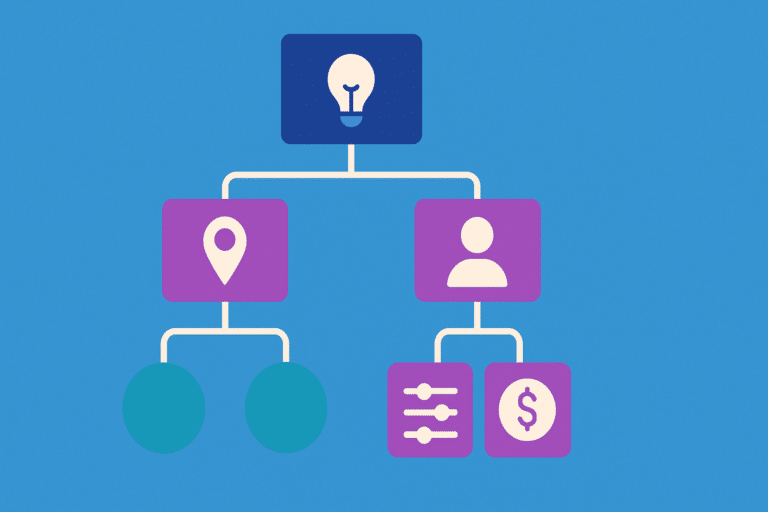
Meta Ads Not Performing? A Real Diagnostic Method
Read the article: Meta Ads Not Performing? A Real Diagnostic MethodMost underperformance has one dominant cause, found by checking four gates in order: the click, the landing page, tracking, then signal volume.
-

Meta Ad Policies and Account Bans: Avoid and Recover
Read the article: Meta Ad Policies and Account Bans: Avoid and RecoverMost Meta bans are really restrictions, and many are reversed on appeal, but not after 180 days. A calm, documented review request gives you the best odds.
-
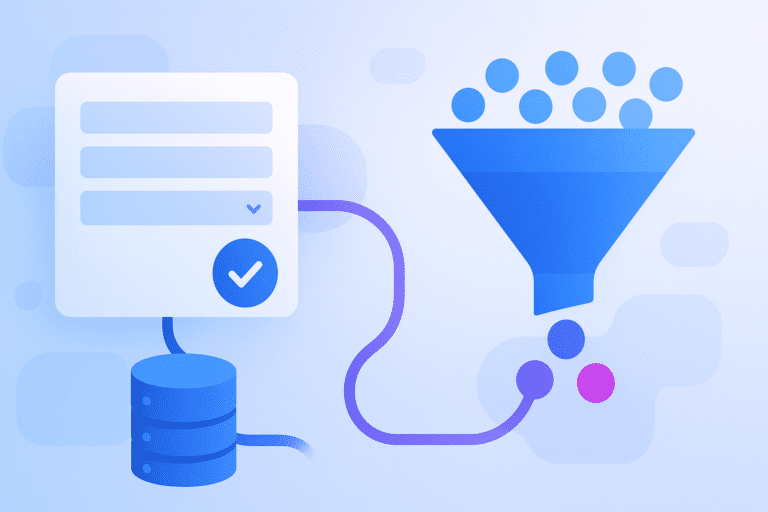
Meta Lead Generation for B2B: The Honest Guide
Read the article: Meta Lead Generation for B2B: The Honest GuideFacebook clicks average about $0.62 versus $5.39 on LinkedIn. B2B buyers are on Meta; the job is capturing intent, qualifying leads and tying them to revenue.
-

Advantage+ Shopping (ASC): The E-commerce Guide
Read the article: Advantage+ Shopping (ASC): The E-commerce GuideAdvantage+ Shopping passed a 20 billion dollar annual run rate in Q4 2024. It leans hard on your catalog and creative volume, and it does not always win.
-

Scaling Meta Ads Without Breaking Performance
Read the article: Scaling Meta Ads Without Breaking PerformanceScaling on Meta is about pace and structure, not a bigger budget. Vertical and horizontal scaling each fit a case, and each must protect the learning phase.
-

Meta Learning Phase: How It Really Works
Read the article: Meta Learning Phase: How It Really WorksCost per result can run two to three times above target while Meta explores, so day two tells you almost nothing. Panic edits only reset the clock.
-

Meta Bid Strategies: Lowest Cost vs Cost Cap vs ROAS
Read the article: Meta Bid Strategies: Lowest Cost vs Cost Cap vs ROASMeta's auction rewards total value, not the highest bid, so the default strategy is usually right. Cost cap, bid cap and ROAS goals solve specific problems.
-
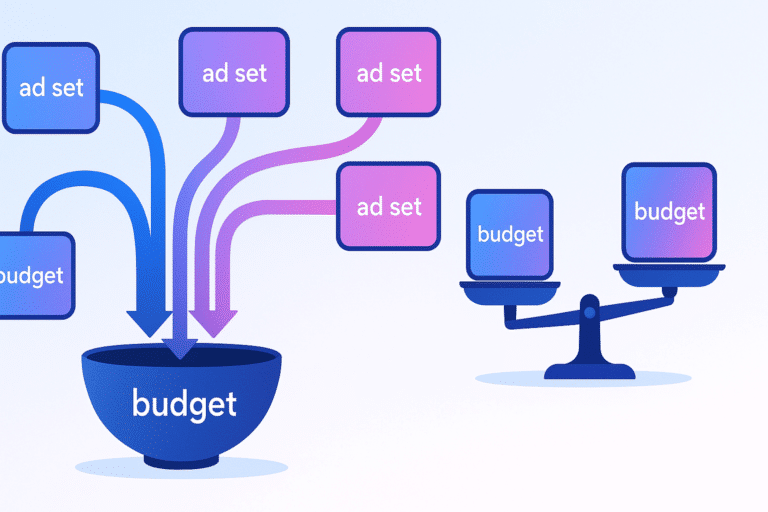
CBO vs ABO on Meta: Which Budget Wins
Read the article: CBO vs ABO on Meta: Which Budget WinsCBO and ABO are not a ranking but two places to put a budget. Below about fifty events per ad set in seven days, CBO simply guesses with your whole…
-

Meta Ad Copywriting: What Actually Converts
Read the article: Meta Ad Copywriting: What Actually ConvertsMeta recommends about 125 characters of primary text and 40 for the headline, but short copy does not always win. Length should follow audience temperature.
-
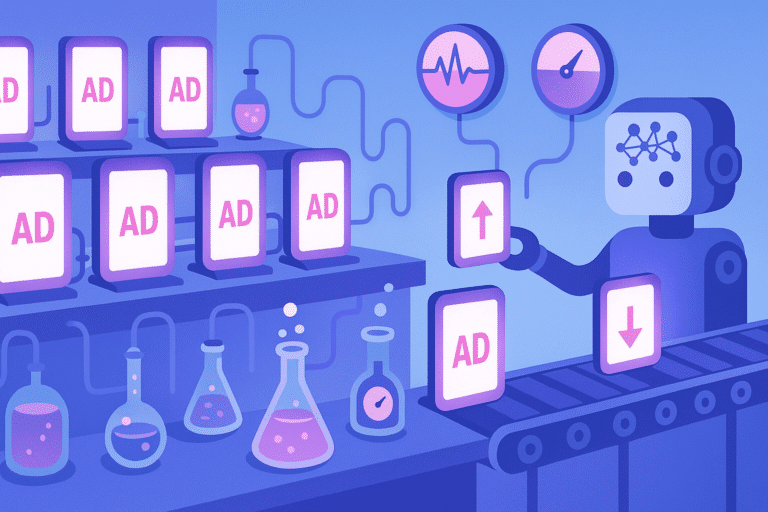
Meta Creative Testing: Find Winning Ads
Read the article: Meta Creative Testing: Find Winning AdsSingle-variable tests need about fifty conversions per cell, so six variants need three hundred. Creative testing on Meta is a hunt for outliers instead.
-

UGC for Meta Ads: Why It Works and How to Produce It
Read the article: UGC for Meta Ads: Why It Works and How to Produce ItEmplifi measured a 10.38x higher conversion rate for social posts with UGC in Q3 2025. Creator content still costs money, needs a real brief and can lose.
-

Meta Ad Formats: Which One, When, and Why
Read the article: Meta Ad Formats: Which One, When, and WhyReels reached 26 percent of Instagram ad impressions in Q3 2025, so design in 9:16 first. Video does not always beat image, and the carousel is not dead.


-

GEO: the five studies that could prove us wrong
Read the article: GEO: the five studies that could prove us wrongWe argue that most of what the market calls GEO is unproven. Here are the five strongest published works that say the opposite, and the conditions that would change our…
-

Test GEO on your own site in 30 days: our protocol
Read the article: Test GEO on your own site in 30 days: our protocolNobody can tell you whether GEO works in the abstract. You can measure it on your own site, in thirty days, with a control group and repeated measurements.
-

What GEO really costs, and what we refuse to sell
Read the article: What GEO really costs, and what we refuse to sell55 percent of marketers now have a GEO budget line. Not one practitioner surveyed disclosed an amount. Here are our prices, and the list of what we refuse to bill…
-

Are the publisher apocalypse numbers honest?
Read the article: Are the publisher apocalypse numbers honest?Minus 58 percent, minus 70 percent, or minus 10 percent? Each camp measures a different thing and uses the same word. How to read the numbers on traffic decline.
-

Sixteen percent of the sources AI cites are themselves written by AI
Read the article: Sixteen percent of the sources AI cites are themselves written by AIAn audit of 712 real queries across four engines measures that roughly one cited source in six is generated content. GEO mechanically rewards what degrades the corpus.
-

Manipulating AI answers: what works in the lab, what holds up in production
Read the article: Manipulating AI answers: what works in the lab, what holds up in productionInjection attacks work on isolated systems. In production, a testbed of 1,000 black-hat sites measures 99.78 percent neutralization. The real weakness is somewhere else entirely.
-

The sources AI prefers are not yours
Read the article: The sources AI prefers are not yoursGenerative engines systematically favor third-party sources over the content you publish on your own site. Your GEO budget is therefore aimed at the wrong place.
-

Global brands 73 percent, niche brands 11 percent: GEO democratizes nothing
Read the article: Global brands 73 percent, niche brands 11 percent: GEO democratizes nothingAcross 100,000 answers and 100 brands, three visibility tiers appear from the very first query. A small player does not start at zero. It starts at 11 percent.
-

Position bias: your content is not losing on substance, it is losing in the middle
Read the article: Position bias: your content is not losing on substance, it is losing in the middleA model's performance on a piece of information follows a U-shaped curve depending on where it sits in the context. Part of generative visibility is a placement artifact.
-

Your GEO tracking tool is measuring noise
Read the article: Your GEO tracking tool is measuring noiseVisibility in generative search is a distribution, not a point. A single measurement, which is exactly what your monthly report contains, demonstrates nothing.
-

30.6 percent of AI citations misrepresent their source: the real risk is not absence, it is error
Read the article: 30.6 percent of AI citations misrepresent their source: the real risk is not absence, it is error761,495 citation pairs analyzed: close to a third misrepresent the source they point at. What that means when the misrepresented source is you.
-

The GEO market is booming, usage is flat: the gap nobody looks at
Read the article: The GEO market is booming, usage is flat: the gap nobody looks atThe Reuters Institute measures zero growth in chatbot use for news across the United States, the United Kingdom, France and Germany, while 55 percent of marketers open a GEO budget…


