SEO articles
Technical SEO, content and rankings, from real projects.
Google Ads articles
Search, Shopping and Performance Max campaigns that pay for themselves.
Emailing articles
Cold email, deliverability and sequences that get replies.
GEO articles
Generative engine optimization: what is proven, what is not.
-

Hreflang Tags: The Complete Implementation Guide
Read the article: Hreflang Tags: The Complete Implementation GuideHreflang tags are HTML annotations that tell search engines which language and regional version of a page should be served to which users. They exist to solve a specific problem:…
-

Multilingual Content Strategy: Translation, Localization, or Transcreation?
Read the article: Multilingual Content Strategy: Translation, Localization, or Transcreation?Most businesses entering international markets default to translating their existing content and hoping it performs. This approach fails more often than it succeeds because translation addresses language but ignores everything…
-

SEO for Emerging Markets: Africa, Southeast Asia, and Latin America
Read the article: SEO for Emerging Markets: Africa, Southeast Asia, and Latin AmericaEmerging markets represent the largest untapped opportunity in global SEO. Africa, Southeast Asia, and Latin America are adding hundreds of millions of new internet users annually, and the competition for…
-

E-Commerce SEO: The Complete Guide to Ranking Your Online Store
Read the article: E-Commerce SEO: The Complete Guide to Ranking Your Online StoreE-commerce SEO is fundamentally different from traditional website optimization. When you are ranking product pages, category pages, and collection archives simultaneously, you face architectural challenges that content-focused sites never encounter.…
-

Product Page SEO: How to Optimize for Rankings and Conversions
Read the article: Product Page SEO: How to Optimize for Rankings and ConversionsYour product pages are the frontline of your e-commerce SEO strategy. They are where search intent meets commercial intent: users are searching to buy, and Google is eager to rank…
-

Faceted Navigation and SEO: How to Avoid Crawl Budget Nightmares
Read the article: Faceted Navigation and SEO: How to Avoid Crawl Budget NightmaresIf you run an e-commerce site, a job board, or any platform with a large catalog, you have probably used faceted navigation: those filter dropdowns for color, size, brand, price…
-

Google Shopping and Product Schema: Getting Rich Results for Your Products
Read the article: Google Shopping and Product Schema: Getting Rich Results for Your ProductsWhen a potential customer searches for a product on Google, they no longer see ten plain blue links. They see images, prices, ratings, and availability status, all visible in the…
-

AI Overviews: How Google’s AI Answers Change SEO
Read the article: AI Overviews: How Google’s AI Answers Change SEOIn late 2023, Google started testing a feature that would eventually reshape the entire search landscape. By 2025, AI Overviews (Google’s AI-generated answer boxes) were appearing on a substantial share…
-

Zero-Click Searches: How to Win When Nobody Clicks
Read the article: Zero-Click Searches: How to Win When Nobody ClicksSparkToro and Datos’s joint research, run repeatedly through 2023-2025 by Rand Fishkin, has documented a striking pattern: roughly two-thirds of all Google searches generate zero clicks to external websites. Zero-click…
-

AI Content and SEO: What Google Actually Says vs What People Think
Read the article: AI Content and SEO: What Google Actually Says vs What People ThinkThe narrative around AI-generated content in SEO has been dominated by fear, myths, and half-truths. Most blog posts claim AI content is either an instant ranking killer or a search-engine…
-

AI Crawlers and Your Content: How to Control What AI Models Access
Read the article: AI Crawlers and Your Content: How to Control What AI Models AccessFive years ago, the question of whether to allow AI crawlers onto your website barely existed. Today, it is a critical decision that separates publishers managing their content strategy from…
-

Google Search Console: The Complete Guide
Read the article: Google Search Console: The Complete GuideGoogle Search Console (GSC) is the most essential free tool for SEO professionals and site owners. Unlike Google Analytics, which shows what visitors do once they arrive, GSC shows what…


-

The Most Expensive Google Ads Mistakes: Diagnosis and Real Cases
Read the article: The Most Expensive Google Ads Mistakes: Diagnosis and Real CasesYour Google Ads budget evaporates without measurable returns? You’re not alone. Studies show that 20 to 50% of Google Ads spending is wasted on most accounts. Worse: the errors causing…
-

Google Ads Policy and Suspensions: Sensitive Categories and Appeal Process
Read the article: Google Ads Policy and Suspensions: Sensitive Categories and Appeal ProcessGetting your Google Ads account suspended is one of the most painful experiences for any digital marketer or business owner. Your campaigns vanish overnight, your budget stops spending, and worst…
-

Query Sculpting: Advanced Shopping Architecture with Priorities and Negatives
Read the article: Query Sculpting: Advanced Shopping Architecture with Priorities and NegativesIntroduction: Why Query Sculpting Changes the Game Most Google Shopping advertisers manage their campaigns in an overly simplistic way: a single campaign, one set of bids, zero granularity. Result: you…
-

Connected TV Advertising: CTV Campaigns via YouTube and Demand Gen
Read the article: Connected TV Advertising: CTV Campaigns via YouTube and Demand GenConnected TV (CTV) advertising has evolved from experimental territory to a proven powerhouse in the modern marketing stack. Streaming now accounts for nearly half of all television viewing time in…
-

Google Ads Scripts and Automation: Essential Scripts for 2026
Read the article: Google Ads Scripts and Automation: Essential Scripts for 2026Google Ads Scripts represent one of the most powerful yet underutilized features available to PPC professionals managing large-scale advertising operations. In 2026, as competition intensifies and campaign complexity grows, mastering…
-

Google Ads A/B Testing: Variations, Experiments and Campaign Mix
Read the article: Google Ads A/B Testing: Variations, Experiments and Campaign MixGetting decisions right in paid search doesn’t rely on intuition. It relies on controlled experiments. Google Ads’ native experimentation framework has evolved significantly through 2025 and into 2026, offering multiple…
-

Call Tracking and Migration to Call Assets: 2026 Guide
Read the article: Call Tracking and Migration to Call Assets: 2026 GuideGoogle Ads is fundamentally reshaping how businesses track phone calls. If you’re still using call-only ads, your days are numbered: by February 2027, Google will stop delivering impressions to call-only…
-

Advanced Google Ads Reporting: Custom Columns, Dashboards and Looker Studio
Read the article: Advanced Google Ads Reporting: Custom Columns, Dashboards and Looker StudioGoogle Ads reporting has evolved dramatically. Where marketers once relied on basic metrics and manual spreadsheet exports, today’s platform offers sophisticated tools for building custom dashboards, automating data flows, and…
-
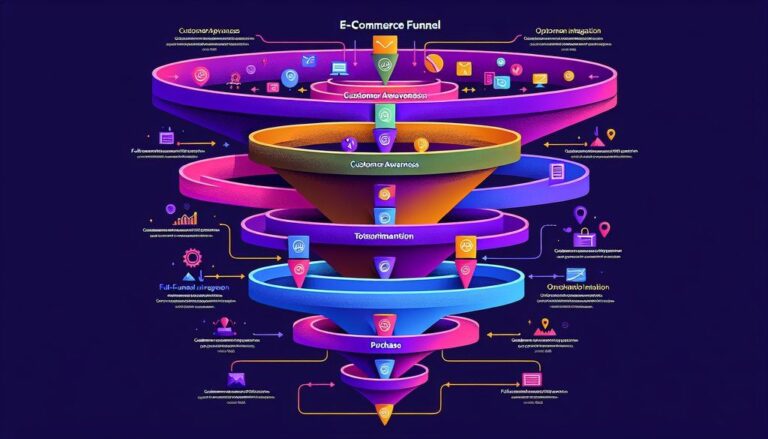
Google Ads for E-commerce: Full Funnel Strategy
Read the article: Google Ads for E-commerce: Full Funnel StrategyThe context has shifted in 2025. E-commerce no longer functions in silos: each stage of the customer journey interacts with others, amplifying or sabotaging your results. Advertisers continuing to treat…
-

Google Ads for B2B and Lead Generation: Forms, CRM and Long Sales Cycles
Read the article: Google Ads for B2B and Lead Generation: Forms, CRM and Long Sales CyclesGoogle Ads for B2B and Lead Generation: Forms, CRM and Long Sales Cycles B2B companies face a unique challenge: their sales cycles stretch over months, sometimes years. A decision-maker must…
-

Google Ad Grants: $10,000/Month in Free Advertising for Nonprofits
Read the article: Google Ad Grants: $10,000/Month in Free Advertising for NonprofitsWhat Is Google Ad Grants? Understanding the Program Google Ad Grants provides up to $10,000 USD per month in free search advertising to qualifying nonprofit organizations. Since 2003, Google has…
-

Attribution and Offline Conversions: Data Manager API, CRM and Incrementality Testing
Read the article: Attribution and Offline Conversions: Data Manager API, CRM and Incrementality TestingModern digital marketing operates across an increasingly fragmented landscape. Customers engage with your brand across multiple devices, channels, and touchpoints before making a purchase decision. Yet many businesses still rely…


-

MTA-STS does not protect what you send
Read the article: MTA-STS does not protect what you sendYou may have published SPF, DKIM and DMARC. You have therefore settled the question of who is allowed to write in your name. You have settled nothing at all about…
-

In May the IETF wrote that nobody uses ARC
Read the article: In May the IETF wrote that nobody uses ARCThere is a protocol that has been presented for seven years as the solution to the oldest problem in email authentication. It has a serious name, an RFC, and the…
-

Your logo does not depend on you
Read the article: Your logo does not depend on youSomeone will sell you a certificate. They will explain that it makes your logo appear in the inbox, and that this appearance buys trust, therefore opens, therefore revenue. All of…
-

BIMI requires a setting the standard deleted
Read the article: BIMI requires a setting the standard deletedSometimes a standard and its usage drift apart slowly, without anyone noticing. In email there is one case where the divergence is total, documented on both sides, and perfectly visible:…
-

Google is retiring the indicator everyone watches
Read the article: Google is retiring the indicator everyone watchesThere is one deliverability indicator everyone watches, everyone comments on, and nobody knows what to do with. It is called domain reputation. Google has been showing it in Postmaster Tools…
-
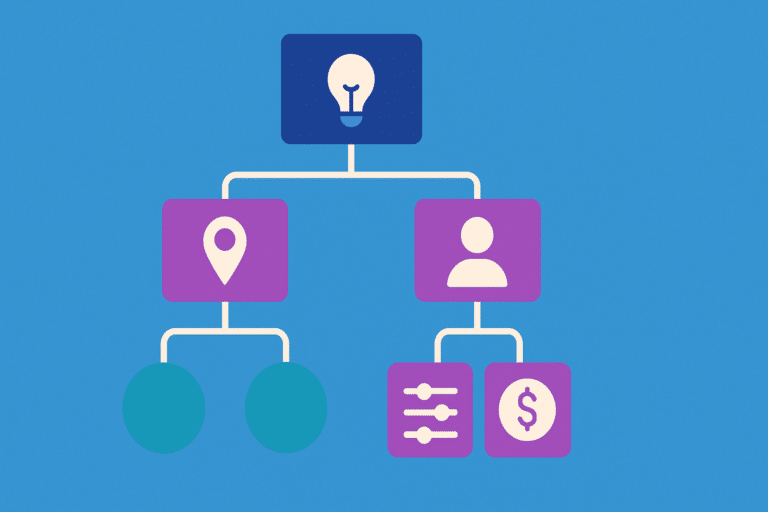
Meta Ads Not Performing? A Real Diagnostic Method
Read the article: Meta Ads Not Performing? A Real Diagnostic MethodYour Meta ads are not performing and you have no idea why. So you do what everyone does. You change the audience. Then you change the budget. Then you pause…
-

Meta Ad Policies and Account Bans: Avoid and Recover
Read the article: Meta Ad Policies and Account Bans: Avoid and RecoverFew emails ruin a morning faster than «Your ad account has been disabled». One moment your campaigns are spending, the next your access is gone and the dashboard shows a…
-

Meta Lead Generation for B2B: The Honest Guide
Read the article: Meta Lead Generation for B2B: The Honest GuideThere is a persistent story in B2B marketing that Facebook and Instagram are where you sell shoes and supplements, not enterprise software or industrial equipment. The story is wrong, and…
-

Advantage+ Shopping (ASC): The E-commerce Guide
Read the article: Advantage+ Shopping (ASC): The E-commerce GuideAdvantage+ Shopping Campaigns, ASC for short, stopped being an experiment a long time ago. On Meta s Q4 2024 earnings call, CFO Susan Li said the product had passed a…
-

Scaling Meta Ads Without Breaking Performance
Read the article: Scaling Meta Ads Without Breaking PerformanceYou found a campaign that works. The cost per result is where you want it, the return holds, and the obvious next move is to pour more money in. Then…
-

Meta Learning Phase: How It Really Works
Read the article: Meta Learning Phase: How It Really WorksThe learning phase is the most misunderstood mechanic in Meta advertising, and that misunderstanding costs real money. Half of what circulates about it on forums and agency blogs is folklore:…
-

Meta Bid Strategies: Lowest Cost vs Cost Cap vs ROAS
Read the article: Meta Bid Strategies: Lowest Cost vs Cost Cap vs ROASMost advertisers pick a bid strategy the way they pick a Netflix show: by guessing, then second guessing. The folklore around Meta bidding is thick and mostly wrong. Bid cap…
-
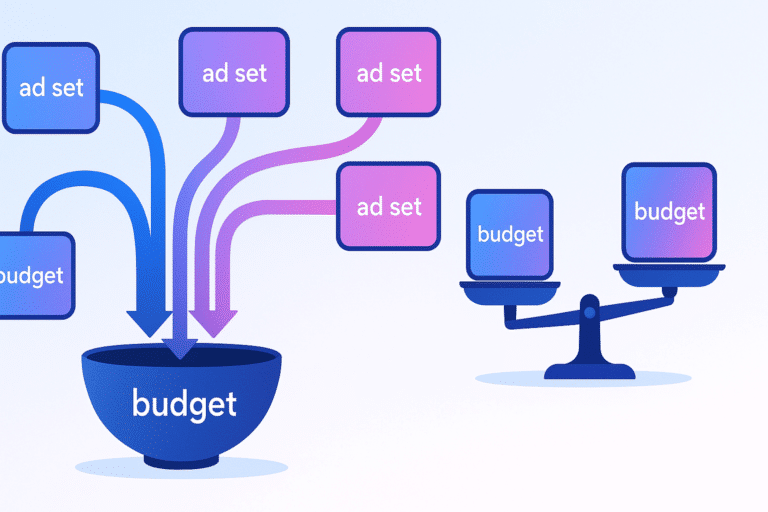
CBO vs ABO on Meta: Which Budget Wins
Read the article: CBO vs ABO on Meta: Which Budget WinsOpen any Meta ads forum and you will read the same verdict, repeated like a law of physics: CBO is better, ABO is dead, let the algorithm decide. That verdict…
-

Meta Ad Copywriting: What Actually Converts
Read the article: Meta Ad Copywriting: What Actually ConvertsMost advice about Meta ad copy is recycled folklore. People repeat that short copy always wins, that nobody reads, that the algorithm now writes everything for you. None of it…
-
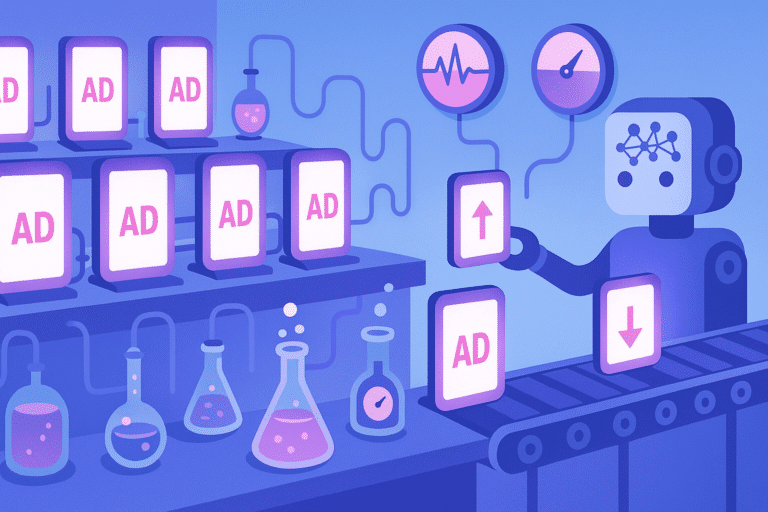
Meta Creative Testing: Find Winning Ads
Read the article: Meta Creative Testing: Find Winning AdsCreative is now the lever that decides whether you win or lose on Meta. The targeting moved into the machine, the auction sorts itself out, and what is left in…
-

UGC for Meta Ads: Why It Works and How to Produce It
Read the article: UGC for Meta Ads: Why It Works and How to Produce ItUser-generated content has become the default creative format for performance advertisers on Meta, and for good reason. Ads that look like a real person filmed them on a phone consistently…
-

Meta Ad Formats: Which One, When, and Why
Read the article: Meta Ad Formats: Which One, When, and WhyMost advertisers pick a Meta ad format out of habit, not strategy. They run single images because they always have, or they chase Reels because someone said video is the…


-

GEO: the five studies that could prove us wrong
Read the article: GEO: the five studies that could prove us wrongWe argue that most of what the market calls GEO is unproven. Here are the five strongest published works that say the opposite, and the conditions that would change our…
-

Test GEO on your own site in 30 days: our protocol
Read the article: Test GEO on your own site in 30 days: our protocolNobody can tell you whether GEO works in the abstract. You can measure it on your own site, in thirty days, with a control group and repeated measurements.
-

What GEO really costs, and what we refuse to sell
Read the article: What GEO really costs, and what we refuse to sell55 percent of marketers now have a GEO budget line. Not one practitioner surveyed disclosed an amount. Here are our prices, and the list of what we refuse to bill…
-

Are the publisher apocalypse numbers honest?
Read the article: Are the publisher apocalypse numbers honest?Minus 58 percent, minus 70 percent, or minus 10 percent? Each camp measures a different thing and uses the same word. How to read the numbers on traffic decline.
-

Sixteen percent of the sources AI cites are themselves written by AI
Read the article: Sixteen percent of the sources AI cites are themselves written by AIAn audit of 712 real queries across four engines measures that roughly one cited source in six is generated content. GEO mechanically rewards what degrades the corpus.
-

Manipulating AI answers: what works in the lab, what holds up in production
Read the article: Manipulating AI answers: what works in the lab, what holds up in productionInjection attacks work on isolated systems. In production, a testbed of 1,000 black-hat sites measures 99.78 percent neutralization. The real weakness is somewhere else entirely.
-

The sources AI prefers are not yours
Read the article: The sources AI prefers are not yoursGenerative engines systematically favor third-party sources over the content you publish on your own site. Your GEO budget is therefore aimed at the wrong place.
-

Global brands 73 percent, niche brands 11 percent: GEO democratizes nothing
Read the article: Global brands 73 percent, niche brands 11 percent: GEO democratizes nothingAcross 100,000 answers and 100 brands, three visibility tiers appear from the very first query. A small player does not start at zero. It starts at 11 percent.
-

Position bias: your content is not losing on substance, it is losing in the middle
Read the article: Position bias: your content is not losing on substance, it is losing in the middleA model's performance on a piece of information follows a U-shaped curve depending on where it sits in the context. Part of generative visibility is a placement artifact.
-

Your GEO tracking tool is measuring noise
Read the article: Your GEO tracking tool is measuring noiseVisibility in generative search is a distribution, not a point. A single measurement, which is exactly what your monthly report contains, demonstrates nothing.
-

30.6 percent of AI citations misrepresent their source: the real risk is not absence, it is error
Read the article: 30.6 percent of AI citations misrepresent their source: the real risk is not absence, it is error761,495 citation pairs analyzed: close to a third misrepresent the source they point at. What that means when the misrepresented source is you.
-

The GEO market is booming, usage is flat: the gap nobody looks at
Read the article: The GEO market is booming, usage is flat: the gap nobody looks atThe Reuters Institute measures zero growth in chatbot use for news across the United States, the United Kingdom, France and Germany, while 55 percent of marketers open a GEO budget…


