SEO articles
Technical SEO, content and rankings, from real projects.
Google Ads articles
Search, Shopping and Performance Max campaigns that pay for themselves.
Emailing articles
Cold email, deliverability and sequences that get replies.
GEO articles
Generative engine optimization: what is proven, what is not.
-

SEO KPIs: Which Metrics Actually Matter
Read the article: SEO KPIs: Which Metrics Actually MatterDomain Authority and backlink counts are vanity metrics. Five KPIs track outcomes: commercial page traffic, CTR, position, organic conversions and revenue.
-

Tracking SEO ROI: How to Prove the Business Value of Organic Search
Read the article: Tracking SEO ROI: How to Prove the Business Value of Organic SearchSpend 100,000 euros on SEO, attribute 500,000 euros of revenue to it, and ROI is 400 percent. The hard part is attribution, so build a conservative model.
-

Google Analytics 4 for SEO: What to Track and How
Read the article: Google Analytics 4 for SEO: What to Track and HowLink Search Console, mark your conversions, then build five weekly reports. An organic engagement rate under 25 percent is the modern bounce rate alarm.
-

Free SEO Tools: Everything Google Gives You
Read the article: Free SEO Tools: Everything Google Gives YouGoogle's free tools cover 80 percent of what most businesses need. Here is what Search Console and Keyword Planner deliver, and when an upgrade makes sense.
-

How to Create an SEO Strategy from Scratch
Read the article: How to Create an SEO Strategy from ScratchStart with a two-week audit of five baseline metrics, then set measurable goals tied to business outcomes. This 90-day plan fits new and established sites.
-

SEO for B2B: How to Generate Leads Through Organic Search
Read the article: SEO for B2B: How to Generate Leads Through Organic SearchB2B buyers research for 3 to 6 months and involve several decision makers. Map content to every buying stage and persona, with 8 to 15 articles per persona.
-

SEO vs PPC: When to Use Each and How They Work Together
Read the article: SEO vs PPC: When to Use Each and How They Work TogetherPPC brings clicks this week, while SEO takes four to six months and then keeps lowering cost per acquisition. Use paid data to pick organic targets.
-

How to Choose an SEO Agency (and Spot the Bad Ones)
Read the article: How to Choose an SEO Agency (and Spot the Bad Ones)Guaranteed rankings, link packages and opaque reports are red flags. Ask these ten questions before signing, or consider in-house, freelance or hybrid.
-

How Long Does SEO Take? Realistic Timelines for Real Results
Read the article: How Long Does SEO Take? Realistic Timelines for Real ResultsExpect 4 to 12 months for meaningful SEO results: 6 to 12 on a new domain, 2 to 4 for new content on an established one, depending on budget and…
-

Google Algorithm Updates: A Complete History and What Each One Changed
Read the article: Google Algorithm Updates: A Complete History and What Each One ChangedFrom Florida in 2003 to Panda in 2011 and beyond, Google has rewarded quality and punished manipulation. That direction has never reversed.
-

Google Core Updates: How to Recover When Your Traffic Drops Overnight
Read the article: Google Core Updates: How to Recover When Your Traffic Drops OvernightA robots.txt regression, 5xx errors or a stray noindex can mimic a core update. Rule them out, then compare your top 100 pages that fell with those that held.
-

Google Penalties: Manual Actions, Spam Updates, and How to Stay Clean
Read the article: Google Penalties: Manual Actions, Spam Updates, and How to Stay CleanA manual action appears in Search Console and can be appealed once fixed. Algorithmic suppression only lifts when a later update re-evaluates your site.


-

Query Sculpting: Advanced Shopping Architecture with Priorities and Negatives
Read the article: Query Sculpting: Advanced Shopping Architecture with Priorities and NegativesDuplicate Shopping campaigns across three priorities and let negatives route each query by intent. One client tripled ROI and traffic in six weeks this way.
-

Connected TV Advertising: CTV Campaigns via YouTube and Demand Gen
Read the article: Connected TV Advertising: CTV Campaigns via YouTube and Demand GenAgencies planning YouTube on TV screens went from 23% in 2025 to 85% in 2026, and YouTube CTV campaigns average a 6% sales lift.
-

The Most Expensive Google Ads Mistakes: Diagnosis and Real Cases
Read the article: The Most Expensive Google Ads Mistakes: Diagnosis and Real CasesOne B2B account lost $8,000 of a $14,000 monthly budget to job seekers and students. Real audits show where broad match and missing negatives drain spend.
-

Google Ads Policy and Suspensions: Sensitive Categories and Appeal Process
Read the article: Google Ads Policy and Suspensions: Sensitive Categories and Appeal ProcessGoogle suspended 6.7 million advertiser accounts in 2025. Suspension is preventable once you know the three policy tiers, and appeals follow set steps.
-

Google Ads Scripts and Automation: Essential Scripts for 2026
Read the article: Google Ads Scripts and Automation: Essential Scripts for 2026Each Google Ads account allows 250 scripts, capped at 30 minutes per run. The scripts worth running in 2026, starting with anomaly detection.
-

Google Ads A/B Testing: Variations, Experiments and Campaign Mix
Read the article: Google Ads A/B Testing: Variations, Experiments and Campaign MixCustom experiments test one change; Campaign Mix Experiments, from January 2026, test budget splits across campaign types. How to read significance.
-

Call Tracking and Migration to Call Assets: 2026 Guide
Read the article: Call Tracking and Migration to Call Assets: 2026 GuideCall-only ads stop serving in February 2027, and early movers to call assets report 7% more conversions at similar cost. How to migrate without losing calls.
-

Advanced Google Ads Reporting: Custom Columns, Dashboards and Looker Studio
Read the article: Advanced Google Ads Reporting: Custom Columns, Dashboards and Looker StudioCustom columns now accept spreadsheet functions such as IF and ROUND. How to build them, reuse them in dashboards and extend reports with Looker Studio.
-
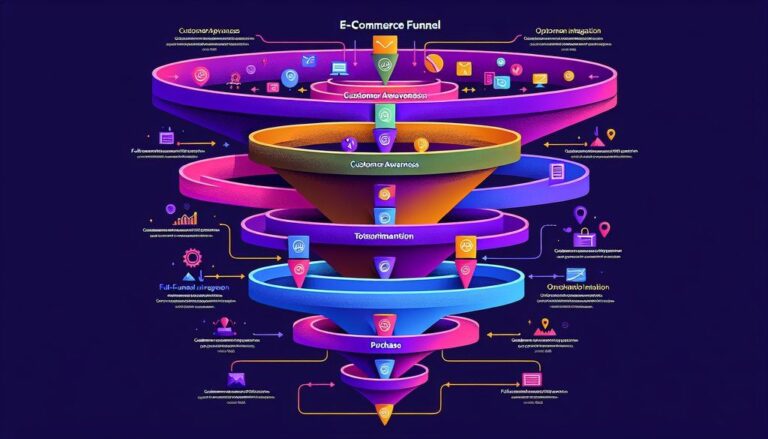
Google Ads for E-commerce: Full Funnel Strategy
Read the article: Google Ads for E-commerce: Full Funnel StrategySiloed e-commerce accounts lose 14% to 31% of ROAS against full funnel ones. A budget split by funnel stage, with a worked swimwear brand example.
-

Google Ads for B2B and Lead Generation: Forms, CRM and Long Sales Cycles
Read the article: Google Ads for B2B and Lead Generation: Forms, CRM and Long Sales CyclesGoogle Ads leads cost $70.11 on average, against $84 across channels. How to build lead forms, connect your CRM and measure sales cycles that last months.
-

Google Ad Grants: $10,000/Month in Free Advertising for Nonprofits
Read the article: Google Ad Grants: $10,000/Month in Free Advertising for NonprofitsQualifying nonprofits receive about $329 a day in search ad credits, not cash. Approval hinges on Goodstack validation, GA4 and a substantive website.
-

Google Ads Conversion Tracking: Tags, Micro/Macro and Enhanced Conversions
Read the article: Google Ads Conversion Tracking: Tags, Micro/Macro and Enhanced ConversionsWithout server-side tracking, e-commerce loses 7% to 15% of its data and B2B SaaS 20% to 40%. How to combine tags, micro goals and enhanced conversions.


-

The accessibility directive does not mention your emails
Read the article: The accessibility directive does not mention your emailsDirective (EU) 2019/882 never uses the word email and limits e-commerce to websites and mobile apps. Neither the Commission guide nor the DGCCRF mentions it.
-

Dark mode is documented only at Apple
Read the article: Dark mode is documented only at AppleApple alone documents it: a campaign with remote images stays in light mode unless it declares color-scheme and uses the prefers-color-scheme media query.
-

Gmail does not block your images, it steps in
Read the article: Gmail does not block your images, it steps inOutlook blocks images by default, citing tracking pixels. Gmail proxies them, which breaks cookie personalization, IP geolocation and live countdowns.
-

Your preheader has been replaced by a summary
Read the article: Your preheader has been replaced by a summaryApple Intelligence replaces your preheader with a summary in iPhone Mail by default. In Europe, Gmail's smart features start off, so it still counts there.
-

Some of your clicks were never made by anyone
Read the article: Some of your clicks were never made by anyoneSafe Links opens your links before delivery, and Microsoft's documentation admits these detonations count as user clicks. Clicks within seconds are the tell.
-

Three operators, three ways of telling you
Read the article: Three operators, three ways of telling youYahoo's feedback loop gives you the address of each recipient who reports spam. Google's only names the campaign, above a threshold it does not publish.
-

Spamhaus does not sell its way out
Read the article: Spamhaus does not sell its way outRemoving a Spamhaus listing is always free. The PBL, over 1.4 billion addresses, is no punishment, and the removal request goes through your provider.
-

The dedicated IP you are sold will never warm up
Read the article: The dedicated IP you are sold will never warm upOn a shared IP, when the IP quota is hit every domain on it stops sending. A dedicated IP needs about 1,000 emails a day per provider just to stay…
-

One subdomain per stream, on one condition nobody quotes
Read the article: One subdomain per stream, on one condition nobody quotesM3AAWG advises one subdomain per sending purpose, if each segment has steady, sufficient volume. Smaller senders can just vary the local part of the address.
-

Two thousand messages a day, and that is all
Read the article: Two thousand messages a day, and that is allA paid Google Workspace user gets 2,000 messages a day on a rolling 24 hours, with tighter recipient caps. Microsoft's rules change on 14 September 2026.
-

No warm-up schedule has ever been published
Read the article: No warm-up schedule has ever been publishedNo mailbox provider has ever published a warm-up table. Google gives principles instead, and the only published figure, from M3AAWG, is six weeks on average.
-

A rejected message tells you exactly why
Read the article: A rejected message tells you exactly whyEvery bounce carries its cause in three numbers. A 4xx may succeed if retried, a 5.1.1 points to your database, and a 5.7.x to reputation or authentication.
-
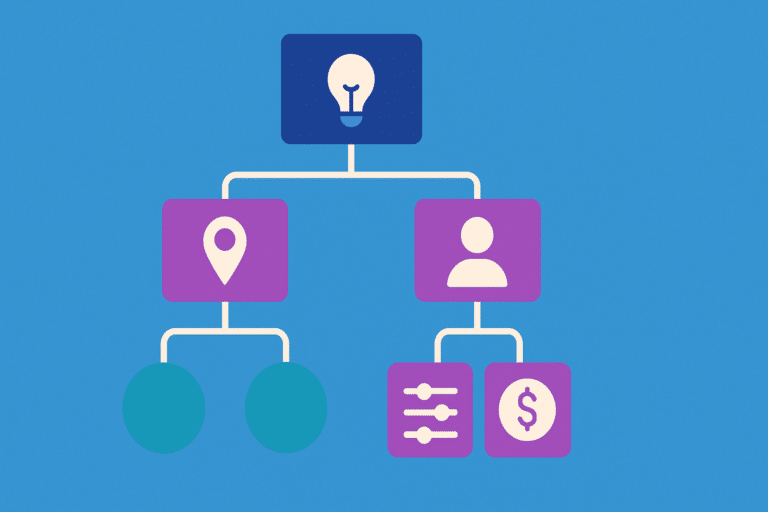
Meta Ads Not Performing? A Real Diagnostic Method
Read the article: Meta Ads Not Performing? A Real Diagnostic MethodMost underperformance has one dominant cause, found by checking four gates in order: the click, the landing page, tracking, then signal volume.
-

Meta Ad Policies and Account Bans: Avoid and Recover
Read the article: Meta Ad Policies and Account Bans: Avoid and RecoverMost Meta bans are really restrictions, and many are reversed on appeal, but not after 180 days. A calm, documented review request gives you the best odds.
-
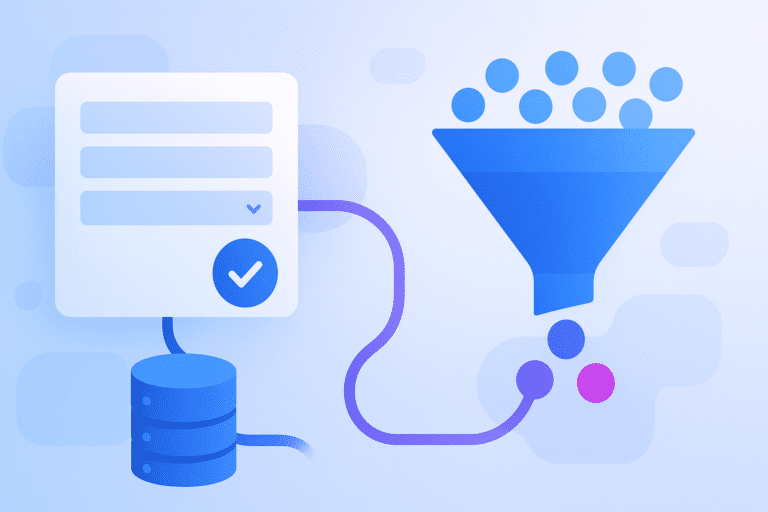
Meta Lead Generation for B2B: The Honest Guide
Read the article: Meta Lead Generation for B2B: The Honest GuideFacebook clicks average about $0.62 versus $5.39 on LinkedIn. B2B buyers are on Meta; the job is capturing intent, qualifying leads and tying them to revenue.
-

Advantage+ Shopping (ASC): The E-commerce Guide
Read the article: Advantage+ Shopping (ASC): The E-commerce GuideAdvantage+ Shopping passed a 20 billion dollar annual run rate in Q4 2024. It leans hard on your catalog and creative volume, and it does not always win.
-

Scaling Meta Ads Without Breaking Performance
Read the article: Scaling Meta Ads Without Breaking PerformanceScaling on Meta is about pace and structure, not a bigger budget. Vertical and horizontal scaling each fit a case, and each must protect the learning phase.
-

Meta Learning Phase: How It Really Works
Read the article: Meta Learning Phase: How It Really WorksCost per result can run two to three times above target while Meta explores, so day two tells you almost nothing. Panic edits only reset the clock.
-

Meta Bid Strategies: Lowest Cost vs Cost Cap vs ROAS
Read the article: Meta Bid Strategies: Lowest Cost vs Cost Cap vs ROASMeta's auction rewards total value, not the highest bid, so the default strategy is usually right. Cost cap, bid cap and ROAS goals solve specific problems.
-
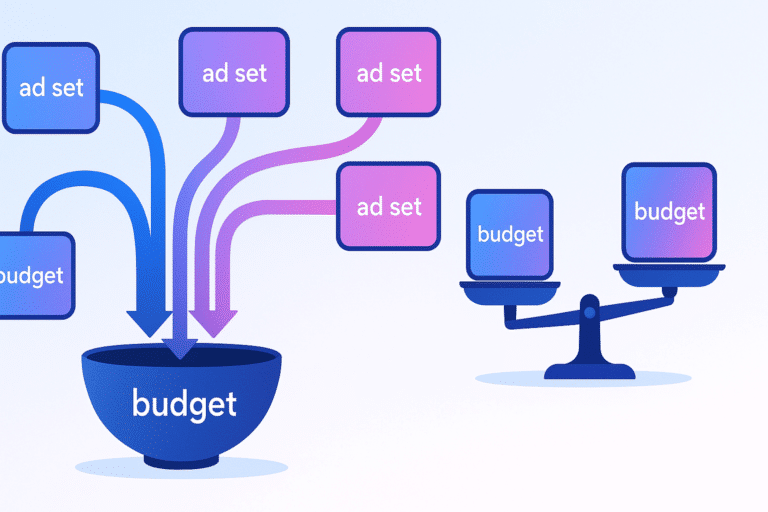
CBO vs ABO on Meta: Which Budget Wins
Read the article: CBO vs ABO on Meta: Which Budget WinsCBO and ABO are not a ranking but two places to put a budget. Below about fifty events per ad set in seven days, CBO simply guesses with your whole…
-

Meta Ad Copywriting: What Actually Converts
Read the article: Meta Ad Copywriting: What Actually ConvertsMeta recommends about 125 characters of primary text and 40 for the headline, but short copy does not always win. Length should follow audience temperature.
-
Meta Creative Testing: Find Winning Ads
Read the article: Meta Creative Testing: Find Winning AdsSingle-variable tests need about fifty conversions per cell, so six variants need three hundred. Creative testing on Meta is a hunt for outliers instead.
-
UGC for Meta Ads: Why It Works and How to Produce It
Read the article: UGC for Meta Ads: Why It Works and How to Produce ItEmplifi measured a 10.38x higher conversion rate for social posts with UGC in Q3 2025. Creator content still costs money, needs a real brief and can lose.
-

Meta Ad Formats: Which One, When, and Why
Read the article: Meta Ad Formats: Which One, When, and WhyReels reached 26 percent of Instagram ad impressions in Q3 2025, so design in 9:16 first. Video does not always beat image, and the carousel is not dead.


-

GEO: the five studies that could prove us wrong
Read the article: GEO: the five studies that could prove us wrongWe argue that most of what the market calls GEO is unproven. Here are the five strongest published works that say the opposite, and the conditions that would change our…
-

Test GEO on your own site in 30 days: our protocol
Read the article: Test GEO on your own site in 30 days: our protocolNobody can tell you whether GEO works in the abstract. You can measure it on your own site, in thirty days, with a control group and repeated measurements.
-

What GEO really costs, and what we refuse to sell
Read the article: What GEO really costs, and what we refuse to sell55 percent of marketers now have a GEO budget line. Not one practitioner surveyed disclosed an amount. Here are our prices, and the list of what we refuse to bill…
-

Are the publisher apocalypse numbers honest?
Read the article: Are the publisher apocalypse numbers honest?Minus 58 percent, minus 70 percent, or minus 10 percent? Each camp measures a different thing and uses the same word. How to read the numbers on traffic decline.
-

Sixteen percent of the sources AI cites are themselves written by AI
Read the article: Sixteen percent of the sources AI cites are themselves written by AIAn audit of 712 real queries across four engines measures that roughly one cited source in six is generated content. GEO mechanically rewards what degrades the corpus.
-

Manipulating AI answers: what works in the lab, what holds up in production
Read the article: Manipulating AI answers: what works in the lab, what holds up in productionInjection attacks work on isolated systems. In production, a testbed of 1,000 black-hat sites measures 99.78 percent neutralization. The real weakness is somewhere else entirely.
-

The sources AI prefers are not yours
Read the article: The sources AI prefers are not yoursGenerative engines systematically favor third-party sources over the content you publish on your own site. Your GEO budget is therefore aimed at the wrong place.
-

Global brands 73 percent, niche brands 11 percent: GEO democratizes nothing
Read the article: Global brands 73 percent, niche brands 11 percent: GEO democratizes nothingAcross 100,000 answers and 100 brands, three visibility tiers appear from the very first query. A small player does not start at zero. It starts at 11 percent.
-

Position bias: your content is not losing on substance, it is losing in the middle
Read the article: Position bias: your content is not losing on substance, it is losing in the middleA model's performance on a piece of information follows a U-shaped curve depending on where it sits in the context. Part of generative visibility is a placement artifact.
-

Your GEO tracking tool is measuring noise
Read the article: Your GEO tracking tool is measuring noiseVisibility in generative search is a distribution, not a point. A single measurement, which is exactly what your monthly report contains, demonstrates nothing.
-

30.6 percent of AI citations misrepresent their source: the real risk is not absence, it is error
Read the article: 30.6 percent of AI citations misrepresent their source: the real risk is not absence, it is error761,495 citation pairs analyzed: close to a third misrepresent the source they point at. What that means when the misrepresented source is you.
-

The GEO market is booming, usage is flat: the gap nobody looks at
Read the article: The GEO market is booming, usage is flat: the gap nobody looks atThe Reuters Institute measures zero growth in chatbot use for news across the United States, the United Kingdom, France and Germany, while 55 percent of marketers open a GEO budget…


